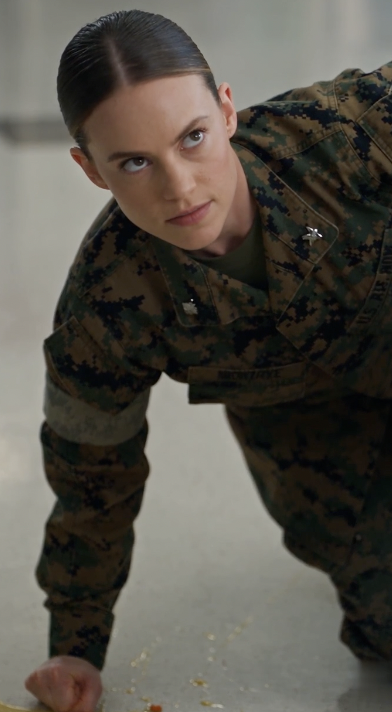
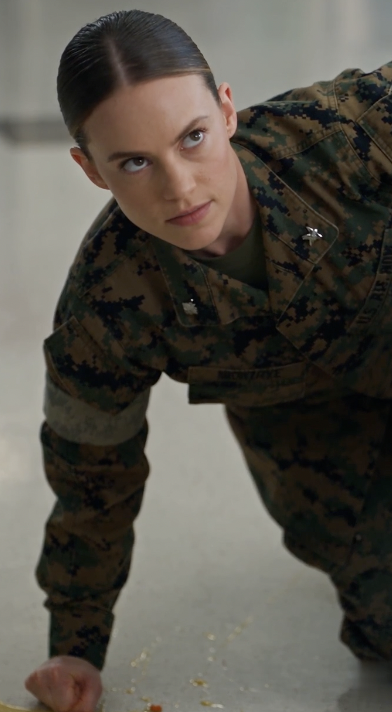
“Looks like you chose the wrong table, sweetheart.”
Then one folded complaint form turned an entire mess hall silent.
The mess hall at Fort Halbrook roared with lunchtime noise until Specialist Derek Vaughn drove his boot into a nearby table.
The metal legs screamed across the floor.
A tray flipped over.
Food and water scattered across the tiles.
Private Lena Mercer crashed beside her overturned chair.
For half a second, nobody moved.
Then the laughter started.
Vaughn stood over her with a grin, feeding on the attention around him.
He was the kind of soldier who used public humiliation to make himself feel powerful.
He preferred targets who looked too quiet to resist.
Lena appeared perfect for him.
Young.
Female.
Alone.
And far too composed for the table she had chosen.
Vaughn stared down at her with a mocking smile.
“Looks like you chose the wrong table, sweetheart.”
More soldiers laughed.
Several raised their phones, eager to turn her humiliation into entertainment.
Lena did not cry.
She did not shout.
She did not scramble away.
She stayed on the floor, one palm against the tile while her other hand remained tightly closed.
Vaughn leaned closer.
“So, what are you going to do?” he asked.
“File a report on me, ma’am?”
Another burst of laughter followed.
This time, however, it sounded weaker.
Lena slowly lifted her head.
There was no fear in her eyes.
Only patience.
Then she opened her fist.
A folded military complaint form rested inside her palm.
It was already completed.
Already signed.
Already bearing Derek Vaughn’s full name.
The laughter died instantly.
Lena unfolded the document and looked straight into his eyes.
“No,” she said.
“I already did.”
The mess hall fell silent.
Not merely quiet.
Completely silent.
Vaughn stared at the form as though it had appeared from thin air.
“What the hell is that?”
Lena rose carefully to her feet.
Her chair remained overturned.
Food still covered the floor around her boots.
Yet the scene no longer looked like humiliation.
It looked like evidence.
“My third complaint,” she said.
Vaughn’s expression tightened.
“Third?”
Across the room, Colonel Marcus Hale had frozen beside the coffee station.
The moment he saw the complaint form, his face changed.
He began walking toward them.
Every soldier watched him cross the mess hall.
Lena brushed dust from her sleeve.
“The first two disappeared.”
Vaughn swallowed.
“You have no idea what you’re talking about.”
Lena tilted her head slightly.
“Don’t I?”
Colonel Hale stopped several feet away.
He studied the overturned tray, the fallen chair, and the motionless soldiers still holding their phones.
Then his gaze settled on Lena.
“Private Mercer,” he said calmly, “is this the incident you warned us might happen?”
Vaughn spun around so quickly that he nearly lost his balance.
Lena never looked toward him.
“Yes, sir.”
The colonel’s jaw tightened.
Vaughn rushed to defend himself.
“Sir, she’s making this look—”
One glance from Hale silenced him.
“Were you identified in two earlier complaints involving intimidation and public harassment?”
Vaughn gave no answer.
That silence answered enough.
Lena raised the document slightly.
“This report will not disappear.”
Colonel Hale accepted the form and read it once.
Then he faced Vaughn again.
“You kicked her table in front of an entire room of witnesses,” he said.
“You attacked another service member, damaged government property, and mocked her for reporting you.”
His voice hardened.
“You did all of it without realizing the complaint was already written.”
Vaughn searched the room for someone willing to stand beside him.
Nobody moved.
Not the soldiers who had laughed.
Not the men who had recorded everything.
Not the crowd that had enjoyed the spectacle until the truth turned against him.
Now everyone understood.
Lena had not walked into a trap.
Vaughn had.
A military police sergeant entered through the side door.
Colonel Hale handed him the complaint form.
“Remove Specialist Vaughn from my mess hall.”
The color vanished from Vaughn’s face.
“Sir, because of this?”
The colonel’s voice became colder.
“No.”
“Because of the pattern.”
The military police officers moved to either side of him.
Vaughn looked at Lena one final time.
“You planned this.”
Lena glanced at the spilled food before meeting his stare.
“No,” she said.
“You simply behaved exactly as everyone expected.”
The words struck harder than any punishment.
Vaughn was escorted out between rows of silent soldiers.
No one laughed now.
No one spoke.
When the doors closed behind him, the mess hall seemed to breathe again.
Colonel Hale faced the room.
“If any of you recorded what happened, you will surrender the footage today.”
Nobody objected.
Then he turned toward Lena.
“Are you hurt?”
Lena looked at the chair lying on its side.
“My pride survived, sir.”
Several soldiers almost smiled, but quickly restrained themselves.
The colonel gave a small nod.
“Good.”
“Then perhaps everyone in this room learned something today.”
After he left, Lena remained standing alone for several seconds.
Then one younger soldier, among the first to laugh, stepped forward.
He slipped his phone into his pocket, crouched, and lifted her tray.
Another soldier gathered napkins.
Someone else set her chair upright.
Nobody had ordered them to help.
They simply chose to.
For the first time, they understood that their silence had protected Vaughn far more than their laughter ever had.
Yet the room did not recover as quickly as everyone expected.
Forks touched trays again. Chairs scraped. Conversations restarted in low, embarrassed fragments. But the noise had changed. It no longer carried the careless confidence that had filled the room before Vaughn kicked Lena’s table.
The young soldier who had lifted Lena’s tray stood beside her with his eyes lowered. His name tape read PIERCE. He was thin, barely twenty, and his face had gone pale beneath the fluorescent lights.
“I’m sorry,” he said.
Lena looked at him.
Private Jonah Pierce swallowed. “I laughed.”
“Yes,” she replied.
The directness of her answer made him flinch.
He glanced toward the doors where Vaughn had disappeared. “I should’ve stopped him.”
“You could have.”
Pierce nodded once, accepting the weight of it. “I didn’t.”
Lena set the rescued tray on the table, although there was little left on it worth saving. “Why did you record it?”
Pierce’s hand froze near his pocket.
Several nearby faces turned toward him.
“I wasn’t—”
“You put your phone away before Colonel Hale gave the order,” Lena said. “Everyone else kept theirs raised.”
Pierce stared at her.
For the first time since Vaughn had been removed, fear entered his expression. It was not fear of Lena. It was fear of being understood.
“I need to speak with you,” he whispered.
“Then speak.”
“Not here.”
Lena studied him for a long moment. The laughter, the quick retreat of the phone, the way he had moved first to restore her chair. None of it fit cleanly together.
Before she could answer, the side door opened again.
The military police sergeant returned alone.
“Private Mercer,” he called. “Colonel Hale needs you in his office.”
The room tightened once more.
Pierce stepped back.
Lena saw the relief on his face, followed immediately by regret.
“Come with me,” she told him.
His head snapped up. “Me?”
“You said you needed to speak.”
The sergeant hesitated. “The colonel asked for Private Mercer only.”
“Then tell him I brought a witness.”
Pierce looked as though he might run.
Instead, he followed.
They crossed the mess hall beneath dozens of silent stares.
Outside, afternoon light washed over Fort Halbrook’s concrete walkways.
The military police sergeant led them toward headquarters.
Pierce walked half a step behind Lena.
“You shouldn’t have brought me,” he said quietly.
“Why?”
“Because I don’t know who’s involved.”
Lena kept her eyes forward. “Involved in what?”
He said nothing.
Inside, Hale stood behind his desk with the third complaint open before him. The military police sergeant closed the door.
Hale’s gaze moved from Lena to Pierce.
“Explain.”
Pierce’s breathing became shallow.
Lena answered first. “He recorded the incident before you ordered everyone to surrender footage. He also believes someone else is involved.”
The colonel’s expression did not change, but his fingers stopped moving over the complaint form.
“Private Pierce,” he said, “give me your phone.”
Pierce did not reach for it.
Hale’s voice sharpened. “Now.”
Pierce slowly removed the device. Instead of handing it over, he held it against his chest.
“With respect, sir, I can’t.”
The sergeant stepped forward.
Lena raised one hand. “Let him explain.”
Hale looked at her. Something unspoken passed between them, brief and controlled.
Then he sat.
“You have thirty seconds, Private.”
Pierce unlocked the phone with trembling fingers. “The video from today isn’t the only thing on here.”
He opened a hidden folder.
There were dozens of files.
Audio recordings. Photographs. Screenshots of messages. Short videos filmed in barracks corridors, motor pools, stairwells, and the far end of the same mess hall.
In several thumbnails, Derek Vaughn appeared beside other soldiers.
In three, he stood with Command Sergeant Major Elias Rourke.
Colonel Hale rose so quickly that his chair rolled backward.
Lena felt cold pressure gather behind her ribs.
Rourke was Fort Halbrook’s senior enlisted leader, and he had personally forwarded Lena’s first complaint for “administrative review.”
Pierce placed the phone on the desk.
“My roommate filed a complaint against Vaughn six months ago,” he said. “Two days later, Sergeant Major Rourke moved him to another company.”
Hale’s eyes remained on the screen. “Name?”
“Private First Class Mateo Ruiz.”
The colonel looked up.
Ruiz had been discharged after a roadside training accident left him with a shattered wrist and severe nerve damage.
Pierce’s voice broke. “It wasn’t an accident.”
He opened an audio file.
Vaughn’s voice filled the office, muffled but recognizable.
“Rourke said Ruiz needed to learn what happens when people write paper.”
Another voice laughed.
Then Rourke spoke.
“Fear is cheaper than discipline. Use it carefully.”
The recording ended.
Colonel Hale’s face emptied of color.
Lena stared at Pierce. “When did you record that?”
“Three months ago.”
“And you said nothing?”
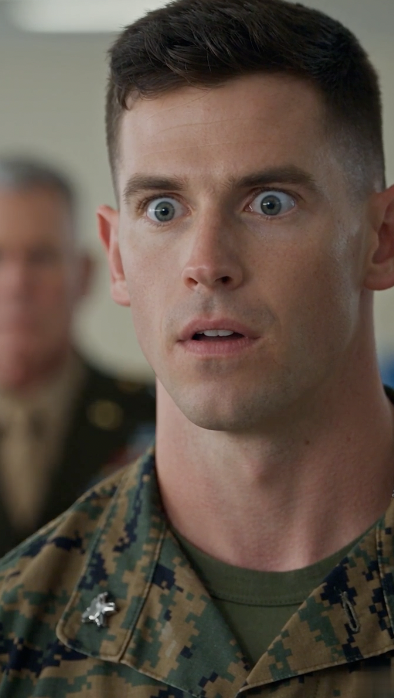
“I sent it.”
“To whom?”
Pierce looked at Colonel Hale. “The command complaint channel.”
Hale’s expression turned grim.
Pierce continued. “The next morning, Sergeant Major Rourke called me into his office. He placed a printed copy of my submission on his desk.”
The colonel’s eyes narrowed. “He knew it was you?”
“He knew every word.”
Pierce’s shame returned like a shadow. “He told me Ruiz would lose his medical appeal if I kept talking. Then he said Vaughn trusted me because I laughed at the right jokes.”
Lena understood before he finished.
“You stayed close to Vaughn.”
Pierce nodded.
“You laughed so he would keep talking.”
Another nod.
“But today?” Lena asked. “Was that part of it?”
Pierce’s eyes filled.
“No.”
“I knew Vaughn was watching your table. I knew he hated that you sat there. I thought he’d say something, maybe threaten you. I started recording because I wanted proof.”
He looked at the floor.
“When he kicked the table, I laughed because everyone else did. Because that’s what I trained myself to do around him.”
His jaw trembled.
“And for one second, I couldn’t tell the difference between pretending to be one of them and becoming one of them.”
**The confession settled over the room more heavily than the recording.**
Lena’s anger was immediate and deserved. Yet Pierce had survived beside men whose approval protected and corrupted him.
He had gathered evidence while participating in the cruelty that produced it. Both things were true.
Colonel Hale reached for the phone.
Pierce held it back again.
“I made copies,” he said. “Encrypted ones.”
“Where?”
Pierce looked at Lena, not Hale.
“One is scheduled to send outside Fort Halbrook tonight unless I cancel it.”
“The installation inspector general. A civilian attorney. Ruiz’s mother.”
Hale stared at him.
Then, unexpectedly, the colonel exhaled.
“Good.”
Pierce blinked. “Sir?”
“Do not cancel it.”
Hale crossed to a locked cabinet and placed a slim black folder beside the phone.
Inside were two complaint forms.
Both carried Lena’s name.
Both carried Derek Vaughn’s name.
The first two complaints.
Pierce looked between them. “She said they disappeared.”
“They did,” Hale replied. “From the official tracking system.”
Lena’s expression remained controlled, but her pulse quickened.
Hale continued. “Three weeks ago, Private Mercer brought the first complaint directly to my office after the equal opportunity clerk claimed no record existed.”
He turned the first page.
“I copied it. I marked the original with invisible archival ink. Then I returned it through the normal channel.”
Hale pointed to a faint ultraviolet mark visible beneath a small desk lamp.
“Forty-eight hours later, the original appeared in a locked shred bin outside Sergeant Major Rourke’s administrative suite.”
Pierce stared at him.
“The second complaint?” he asked.
“A controlled duplicate,” Hale said. “It contained a harmless formatting error known only to Private Mercer and me.”
He opened the second form.
“That exact wording appeared in an unsigned memorandum accusing her of making false allegations.”
Lena looked at Pierce.
“That was why Colonel Hale asked whether today was the incident I warned could occur.”
Hale folded his hands. “Private Mercer believed Vaughn would escalate if he thought his protection was secure. She was correct.”
The military police sergeant frowned. “You allowed her to walk in there knowing he might attack?”
“No,” Hale said.
“Yes,” Lena answered simultaneously.
Hale turned toward her.
For the first time, their calm alliance cracked.
“I authorized observation,” he said. “I did not authorize physical contact.”
“You knew contact was possible.”
“I assigned plainclothes investigators inside the room.”
Pierce looked toward the door. “Who?”
The sergeant shook his head. “Not relevant.”
Lena’s voice remained quiet. “They didn’t stop the table from hitting me.”
Hale’s jaw tightened.
“No,” he admitted. “They did not.”
He could have hidden behind procedure. Instead, he let the failure stand.
**For the first time, Lena saw the cost beneath his composure.**
Hale had not ignored her complaints. He had hidden his attention because he distrusted his own command channels.
But secrecy had protected the investigation better than it protected her.
“That was not the plan,” Hale said. “And it was not acceptable.”
Lena looked at the bruising already forming near her elbow.
“No, sir. It wasn’t.”
Pierce stared at the two complaints. “So Vaughn was the target?”
“Part of the target,” Hale replied.
Lena understood the rest.
“Rourke.”
Hale nodded.
“The complaints did not vanish randomly. Someone with access removed them, tracked the complainants, and used Vaughn to intimidate them.”
The colonel touched Pierce’s phone.
“Now we know who.”
A knock struck the door.
Before anyone answered, it opened.
Command Sergeant Major Elias Rourke entered.
He was broad-shouldered, silver-haired, and composed in the way powerful men often became when they believed composure itself proved innocence.
His gaze moved first to Hale.
Then to Lena.
Then to Pierce’s phone.
The smallest change crossed his face.
It vanished almost instantly.
“Sir,” he said, “I heard there was an incident in the mess hall.”
Hale closed the black folder.
“There was.”
Rourke looked at Lena’s stained uniform. “Private Mercer, I’m sorry this occurred. Specialist Vaughn’s conduct does not represent this command.”
Pierce’s hands curled into fists.
Rourke noticed.
“Private Pierce,” he said warmly, “are you all right?”
Pierce went rigid.
The question sounded kind, but reminded Pierce that Rourke had watched him and could still reach him.
Hale stepped between them.
“Sergeant Major, why was Private Mercer’s first complaint found in a shred bin outside your office?”
Rourke did not blink.
“I have no knowledge of that.”
“Why did wording from her second complaint appear in a retaliatory memorandum?”
“I would need to review the documents.”
“Why does Private Pierce possess a recording of you discussing retaliation against Mateo Ruiz?”
That landed.
Rourke’s eyes shifted toward the phone again.
Once was enough.
He smiled faintly. “A recording can be altered.”
Pierce spoke before fear could stop him.
“There are seven.”
Rourke looked at him.
Pierce’s voice strengthened.
“Seven recordings. Four videos. Twenty-three messages from Vaughn. Two from your aide.”
The warmth disappeared from Rourke’s face.
“Young man, be careful.”
Pierce trembled, but he did not lower his eyes.
“That’s what you told Ruiz.”
Hale said, “You are relieved of your duties pending investigation.”
Rourke gave a quiet laugh.
It was not amusement.
It was disbelief that the room had stopped obeying him.
“On the word of a private who admits he lied for months and another private who staged an incident?”
Lena felt the accusation strike exactly where he intended.
He was not denying the evidence.
He was attacking the people carrying it.
Rourke turned to Hale. “You used a junior soldier as bait. When this becomes public, your career ends before mine does.”
Colonel Hale’s face remained still.
“That may be true.”
Lena looked at him sharply.
“I approved an operation that failed to prevent harm to Private Mercer. I will answer for that decision.”
Then Hale’s voice hardened.
“But accountability is not a shield you may hold in front of your own crimes.”
**The balance of the room changed.**
Rourke survived by making every accusation dangerous to its accuser. Hale removed that weapon by accepting his own exposure.
The sergeant reached for Rourke’s identification badge.
Rourke stepped back.
“This command will collapse without me.”
“No,” Lena said.
Everyone looked at her.
She held his gaze.
“It already began collapsing around you. People simply mistook silence for stability.”
Rourke’s face tightened.
He was escorted out without another word.
The door closed.
Pierce sat heavily. Hale remained standing, looking suddenly older.
“There will be a formal investigation,” he said. “External. Not controlled by this installation.”
He looked at Lena.
“You will be interviewed. So will everyone in the mess hall.”
“And Vaughn?”
“He will face charges based on today’s assault and any conduct supported by the evidence.”
“Ruiz?”
Hale’s eyes moved to Pierce.
“His case will be reopened.”
Pierce covered his mouth.
The sound he made was almost a laugh, almost a sob, and not entirely either.
Lena watched him struggle to contain it.
“You should call him,” she said.
Pierce shook his head. “He won’t answer me.”
“Why?”
“Because I told him to stop fighting the discharge.”
“Rourke made me believe I was protecting him.”
Lena sat across from him.
“Were you?”
“No.”
“Then don’t call to explain.”
Pierce looked up.
“Call to tell the truth.”
That evening, Fort Halbrook changed faster than rumor could be controlled.
Military police sealed Rourke’s office. Investigators collected computers, personnel records, complaint logs, and shredded documents. Soldiers who had once lowered their voices around Vaughn began volunteering statements.
Some came forward out of courage.
Others came forward because the protection they feared had vanished.
Truth did not always arrive nobly. Sometimes it arrived late, frightened, and ashamed.
By midnight, eleven additional service members had reported retaliation connected to Vaughn or Rourke.
By morning, the number was seventeen.
Colonel Hale placed himself on temporary administrative leave before anyone ordered him to do so.
His final action before surrendering command was to send every record in the black folder outside Fort Halbrook.
He included a statement accepting responsibility for the failed protective measures.
**He did not edit the part where Lena fell.**
Three days later, Lena sat in a quiet medical waiting room with a purple bruise along her arm and a paper cup of coffee cooling between her hands.
Pierce entered carrying his phone.
“He answered,” he said.
Lena looked up.
“Ruiz?”
Pierce nodded.
“How did it go?”
“He hung up.”
She waited.
Pierce sat beside her. “Then he called back.”
“He said he hates me,” Pierce continued. “He said he believes I was scared, but that doesn’t erase what I did.”
“That sounds fair.”
“It does.”
“He also said he’ll submit a statement.”
Lena nodded.
Pierce stared at the floor. “I kept thinking the evidence would make me a good person again.”
“It won’t.”
He looked at her, wounded.
Lena softened her voice.
“Evidence proves what happened. It doesn’t decide who you are afterward.”
Pierce considered that.
“What does?”
“What you do when nobody needs you to pretend anymore.”
Weeks passed.
Vaughn was formally charged with assault, retaliation, and other offenses supported by the investigation. Rourke faced a broader inquiry involving obstruction, abuse of authority, and interference with protected complaints.
The process moved through interviews, delays, and legal reviews. Some mornings, Lena wondered whether accountability had only learned to move more quietly.
But the complaints no longer disappeared.
Fort Halbrook established an independent reporting route outside the local command structure. Old cases were reviewed. Ruiz’s discharge was suspended pending reconsideration, and his medical claim was reopened.
Colonel Hale received an official reprimand for approving an operation that exposed Lena to foreseeable harm.
He also remained a central witness against Rourke.
Some called him brave. Others called him reckless. Lena believed both judgments held truth.
When Hale returned to the installation months later, he did not return as commander. He came only to testify and to collect several personal items from his former office.
Lena met him outside headquarters.
“I owe you an apology without an explanation attached,” he said.
She folded her arms.
He continued. “I believed watching the system carefully was the same as protecting the people inside it.”
Lena said nothing.
“It wasn’t.”
“No, sir.”
“I should have stopped the operation sooner.”
“Yes, sir.”
Hale accepted each answer.
Then Lena asked, “Would you make the same decision again?”
He looked toward the mess hall in the distance.
“No.”
She studied him.
“I would still investigate,” he said. “I would still preserve the complaints. But I would not ask one soldier to carry the danger required to expose everyone else.”
It was not forgiveness, but it was truth. For Lena, that was enough to begin.
The mess hall reopened after a week of evidence collection.
The same tables stood beneath the same lights. Nothing looked transformed.
Yet one table remained empty during the busiest lunch hour.
Vaughn’s table.
Soldiers passed it without sitting.
Lena entered carrying a fresh tray.
Conversations dipped, then recovered.
She walked directly toward the empty table.
Pierce was already there, standing beside a chair.
He simply waited.
Across from him sat Mateo Ruiz.
His damaged wrist rested inside a black brace.
Lena stopped at the table.
“I thought you hated this place,” she said to Ruiz.
“I do.”
“Then why come back?”
Ruiz glanced at Pierce.
“To see whether he learned how to sit at the right table.”
Pierce lowered his eyes.
Ruiz let the silence remain long enough to hurt.
Then he moved one chair outward with his foot.
Not for Pierce.
For Lena.
She sat.
Pierce remained standing until Ruiz finally looked at him.
“I’m not forgiving you today,” Ruiz said.
“I know.”
“I may not forgive you tomorrow.”
“I know.”
“But you can sit down.”
Pierce’s face broke.
He sat carefully, as though the chair itself were something he had not earned.
Around them, the mess hall continued eating.
No applause came. No one raised a phone. No commander entered to explain the moment.
That made it better.
Lena unfolded her napkin.
Ruiz looked at the faint bruise still visible near her elbow.
“Was it worth it?” he asked.
She considered the sealed offices, the reopened cases, Hale’s reprimand, Pierce’s guilt, and the long months still waiting ahead.
“No,” she said.
Both men looked at her.
“It should never have required that much.”
Ruiz nodded slowly.
Then Lena added, “But now it won’t require the next person to do it alone.”
**That was the real twist none of them had expected.**
The complaint forms had not been the weapon.
The recordings had not been the weapon.
Even Rourke’s removal had not been the final victory.
**The victory was that silence had lost its usefulness.**
A young soldier approached the table carrying a tray. She was new to Fort Halbrook and clearly uncertain where she belonged.
She glanced around the crowded room.
Then she looked at the empty chair beside Lena.
“Is anyone sitting here?” she asked.
Lena looked at Pierce.
Pierce looked at Ruiz.
Ruiz gave the smallest nod.
Lena turned back to the soldier.
“No,” she said softly. “You’re in the right place.”
The soldier sat.
For a while, they ate without speaking.
Outside, rain began tapping against the mess hall windows.
Inside, nobody laughed at the wrong person.
And beneath the ordinary sound of forks against trays, **four soldiers shared a table that no longer belonged to fear.**
