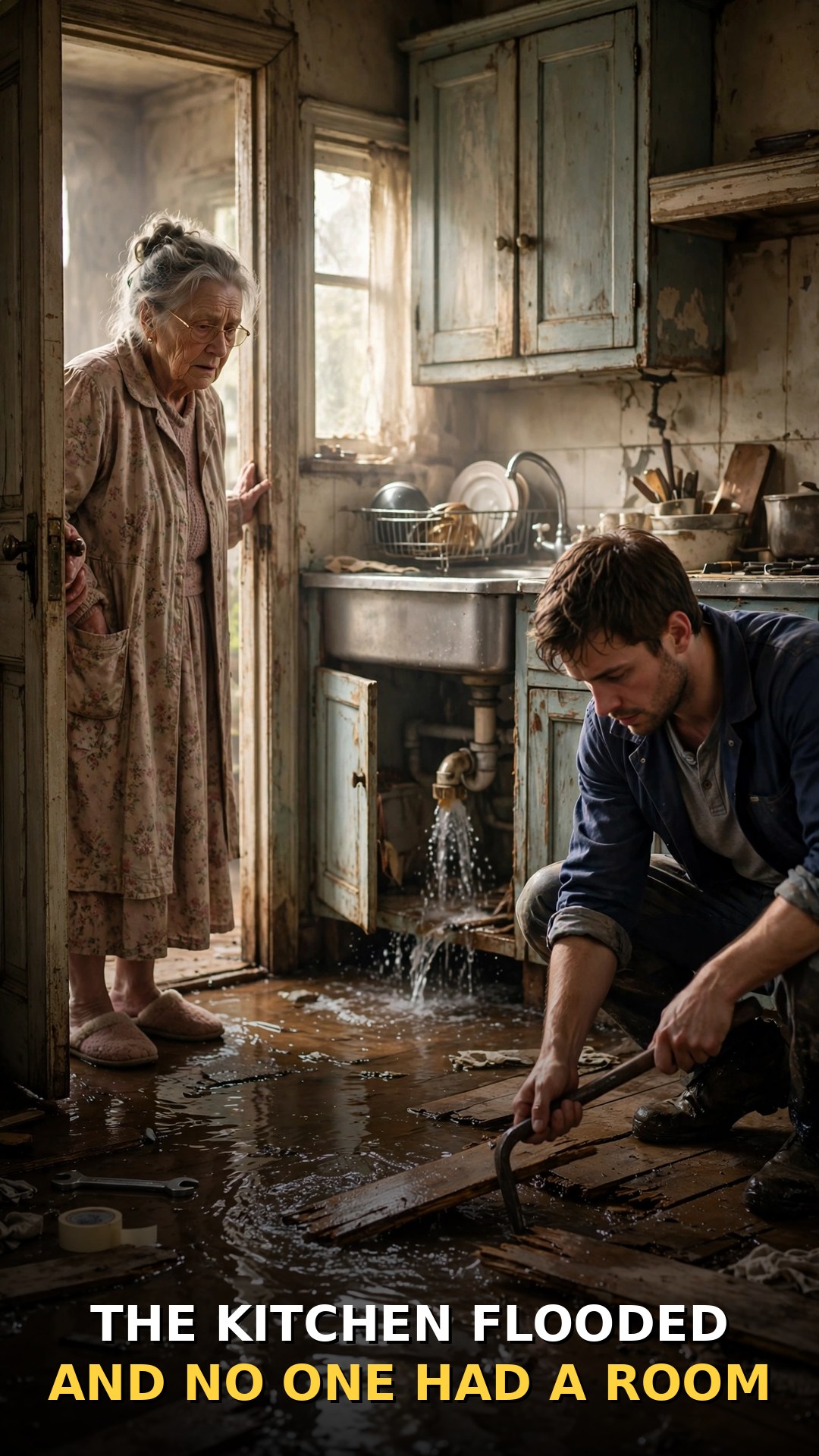
Part 5 — Saturday Breakfasts
The repairs took six more weeks, and Dorothy paid for every one of them herself, watching the kitchen come back to life board by board. When the work was done, she moved home — and Nathan moved with her, into the downstairs rooms, with his few boxes, his uniforms on hangers, and his own front-door key.
He fixed the back gate the first Saturday. She sewed in her sewing room, the machine whirring happily after its long silence. He kept his early routes and his tired feet, but now he slept in a real bed, and in the mornings he came upstairs to a kitchen that smelled of toast and tea.
And on Saturdays, they began a small ritual: breakfast at her kitchen table, nothing fancy, eggs and toast and strong tea, with chairs pulled out for anyone who wanted one.
Peter came first, one Saturday, with his toolbox and no announcement. He fixed the dripping tap without being asked, and stayed for breakfast, and talked about his business the way he used to talk about school when he was small — wanting, underneath it all, for his mother to be proud of him. She was. She told him so.
Susan came the next week, with fruit and flowers, and stayed for coffee long past the hour she would once have scheduled herself to leave. She sat at the table without a timetable, and laughed, and told Dorothy about her daughter’s exams, and asked — really asked — about the sewing room, and the brides, and the forty years of dresses.
Nobody made a speech. Nobody pretended the hard weeks had not happened. Peter’s door had stayed shut, and Susan’s clock had run out, and those things were true and could not be unsaid. But closeness, Dorothy had learned, is not rebuilt in a single afternoon. It is rebuilt the way a house is rebuilt: board by board, Saturday by Saturday, one kept promise at a time.
One morning, as the three of them sat around her table — Peter with his tools, Susan with her fruit, Nathan pouring the tea — Dorothy looked at her children and thought about what she had learned in the spring her kitchen flooded.
A mother does not need a palace. She does not need a fortune, or a residence with gardens, or a room with an expiry date. What she needs is a door that opens without a price attached, and someone on the other side of it who moves their own bed so she can sleep.
Peter had offered her money. Susan had offered her a fortnight. Nathan had offered her his bedroom.
And in the end, that was the whole story: when Dorothy Marsh seemed to have nothing, the child with the least gave her the most — not because he had more, but because he never once stopped to count what giving would cost him.
She kept her house. She kept her dignity. She kept all three of her children, in different ways and at different distances, and she kept the Saturday table where they could all come back to, one breakfast at a time.
A room, she thought, buttering her toast while her sons argued amiably about the back gate, is not four walls and a roof.
A room is someone saying: come now. You take my bedroom. I’ll take the couch.
THE END
