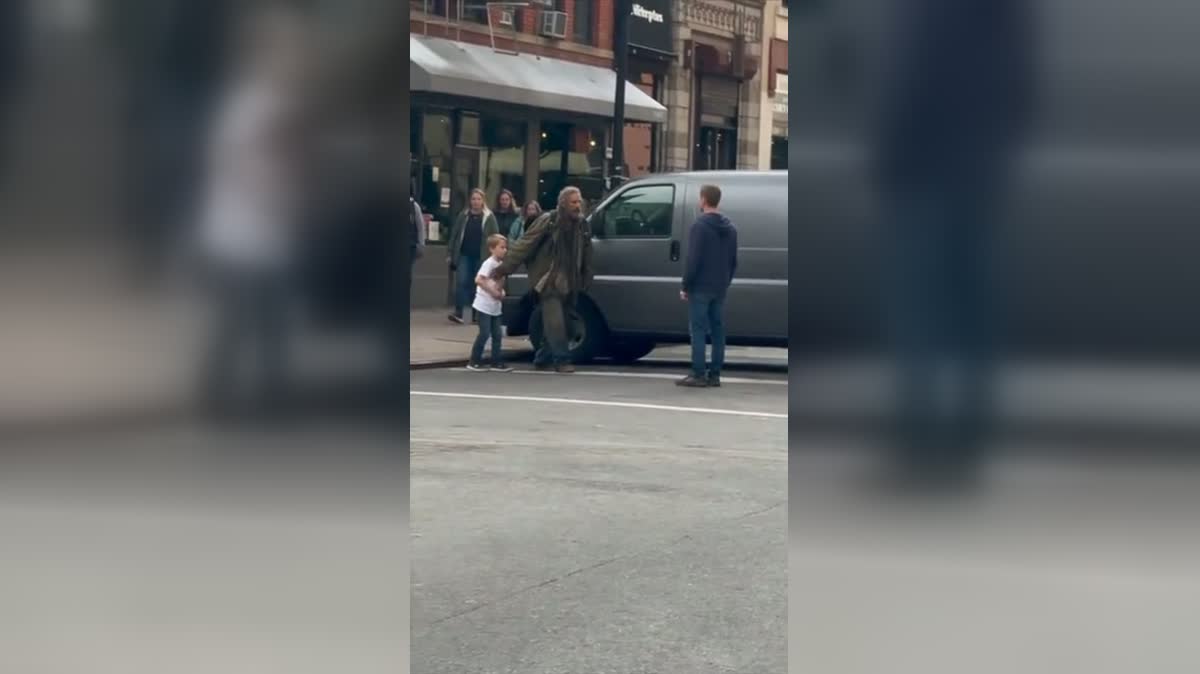
The moment lasts only a few seconds: a child stands near the curb beside a parked van, adults hesitate, and a man in a worn coat reaches him first. What follows is an original human-interest story inspired by that short street scene—a reminder that courage is not always found where people expect to see it.
The Person Everyone Had Learned Not to Notice
Most people on the block knew Daniel only by sight. He carried everything he owned in an old canvas bag, slept wherever he could remain dry, and spent cold mornings near the warm air vent behind a small neighborhood bakery. Some pedestrians greeted him. Others looked through him as if he were part of the pavement.
Daniel noticed them anyway. He knew which delivery trucks arrived before sunrise, which crossing signal stayed red longer than it should, and which families hurried down the street on their way to school. Living outside had made him alert to small changes: a door left open, a dropped wallet, a frightened face, or the sudden silence that often arrives one second before trouble.
A Small Mistake Near a Busy Street
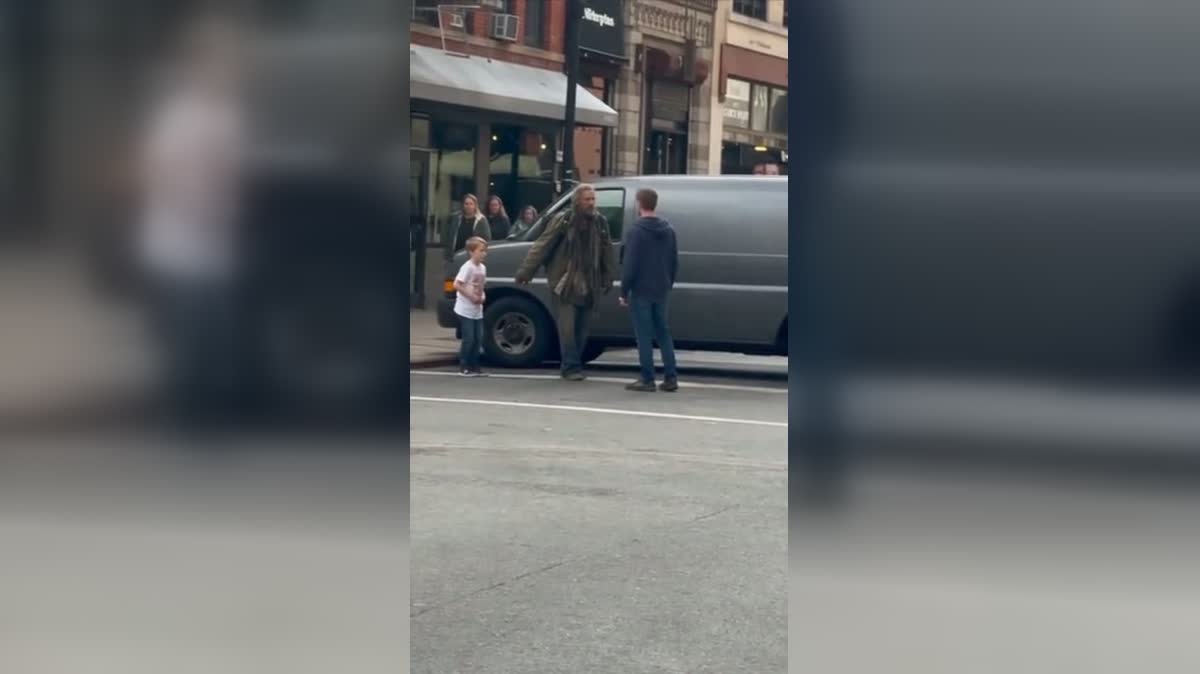
That afternoon, eight-year-old Noah was walking with his father when a small toy slipped from his hand and bounced toward the road. His father had turned for only a moment to answer someone behind him. Noah saw the toy stop near the van and stepped from the safety of the sidewalk before anyone understood what he was doing.
A driver was preparing to pull away. Pedestrians looked up, but the scene had not yet made sense to them. Daniel understood immediately. He moved toward the boy, reached across him, and guided him firmly back toward the curb. It was not dramatic or polished. It was simply fast—the reflex of someone who had been watching when everyone else was distracted.
The Stranger Who Moved First
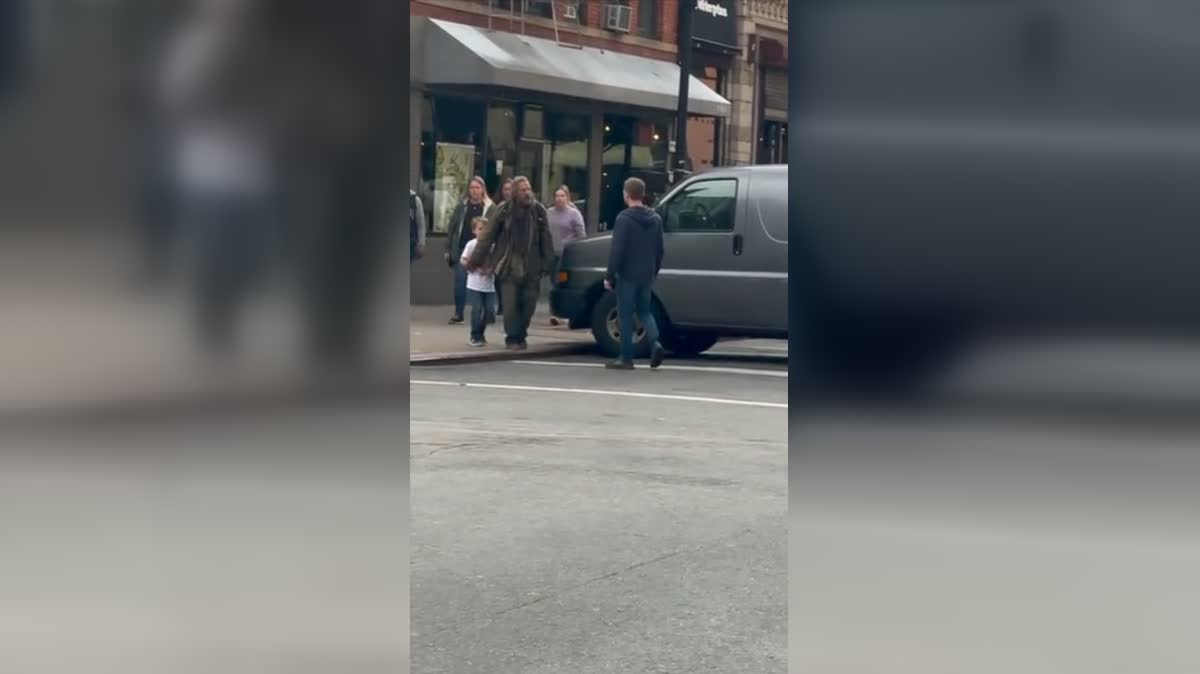
Noah froze beside Daniel as the adults around them finally reacted. His father rushed forward, his face carrying the fear that comes after a danger has already passed. Daniel kept one hand near the boy’s shoulder until he was certain the child was steady.
‘You’re all right,’ Daniel told him quietly. ‘Things can be replaced. You can’t.’
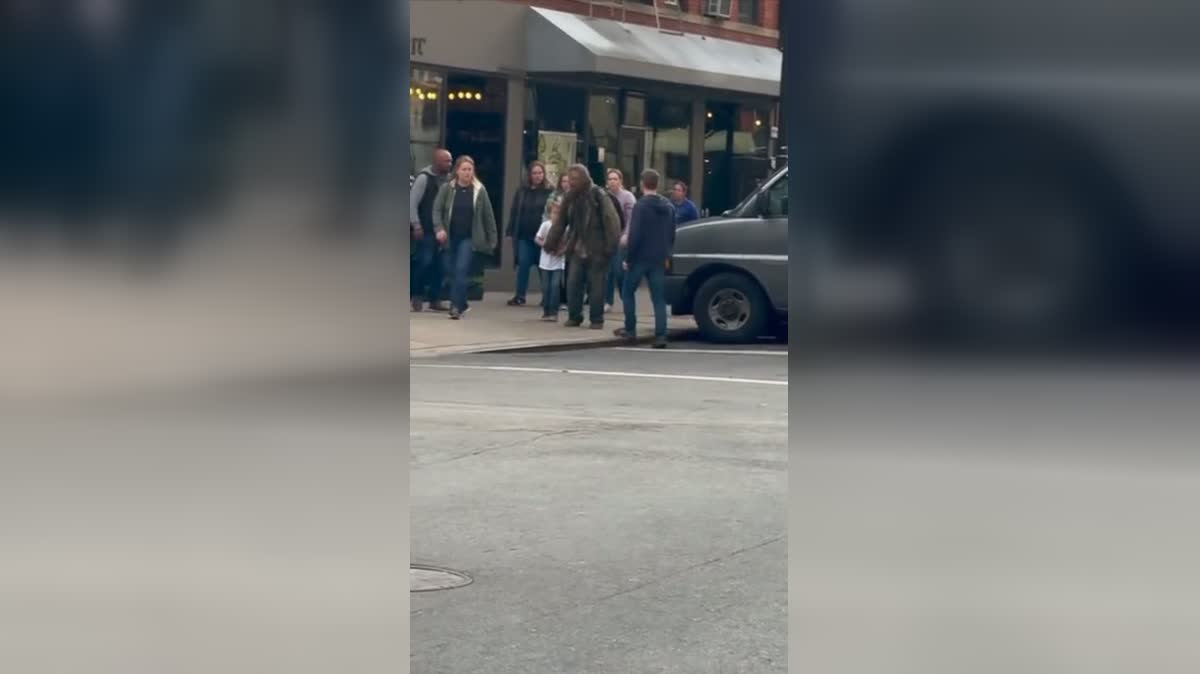
The father knelt, held Noah close, and looked up at the man he had passed many times without learning his name. For a few seconds, nobody spoke. The traffic continued, the van remained beside them, and the people outside the shops watched the familiar street feel suddenly unfamiliar.
What the Camera Could Not Show
A short clip can capture an action, but it cannot hold everything that action means. It cannot show the years Daniel had spent being judged by his clothes. It cannot show how often people guarded their bags when he walked past or how rarely anyone asked whether he was hungry before deciding what kind of person he must be.
It also cannot show the choice he made in that instant. Daniel did not stop to consider whether anyone would thank him, record him, or believe his explanation. He saw a child in danger and acted. That decision came before recognition, before applause, and before anyone else had even found the words to shout.
A Thank-You That Became a Conversation
Noah’s father offered Daniel money. Daniel shook his head. What he accepted instead was a hot meal and a seat inside the bakery. Noah sat across from him, still holding the recovered toy, and asked the questions adults were often too embarrassed to ask: where Daniel slept, whether he had family, and why he knew so much about the street.
Daniel answered without turning his life into a lesson. He had once worked with his hands, he explained, but a chain of losses had left him without stable housing. He did not ask to be treated like a hero. He wanted to be treated like a person.
The father listened. The bakery owner listened too. By the end of the meal, they had written down the number of a local outreach worker and arranged a safe place where Daniel could keep his bag while completing the paperwork needed for temporary housing. None of it erased his difficulties overnight, but it replaced one closed door with an open one.
The Ripple That Stayed After the Video Ended
In the days that followed, the block did not transform into a perfect place. People were still busy, cautious, and imperfect. But several of them began greeting Daniel by name. The bakery gave him a few paid morning jobs. Noah returned with his father and brought a simple drawing of three people standing safely on a sidewalk.
Daniel kept the drawing folded inside his canvas bag. To Noah, it was a thank-you. To Daniel, it was proof that one moment could challenge years of assumptions. The man the street had treated as invisible had been the one person who truly saw what was happening.
The Real Meaning of the Rescue
The child was saved from immediate danger, but the story carries another kind of rescue too. It asks what society misses when appearance becomes a shortcut for character. A clean shirt does not guarantee courage, and a worn coat does not erase dignity. In the moment that mattered, Daniel’s circumstances were not the measure of him—his choice was.
Heroes do not always arrive with authority, comfort, or an impressive title. Sometimes they are already standing nearby, waiting for the rest of us to look closely enough to see them.
Editor’s note: This is an original narrative inspired by the supplied short video. Names and story details are fictionalized because the identities and full circumstances shown in the clip could not be independently verified.
