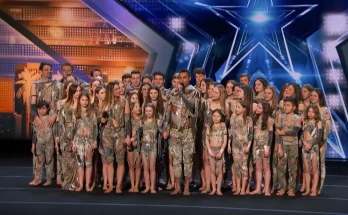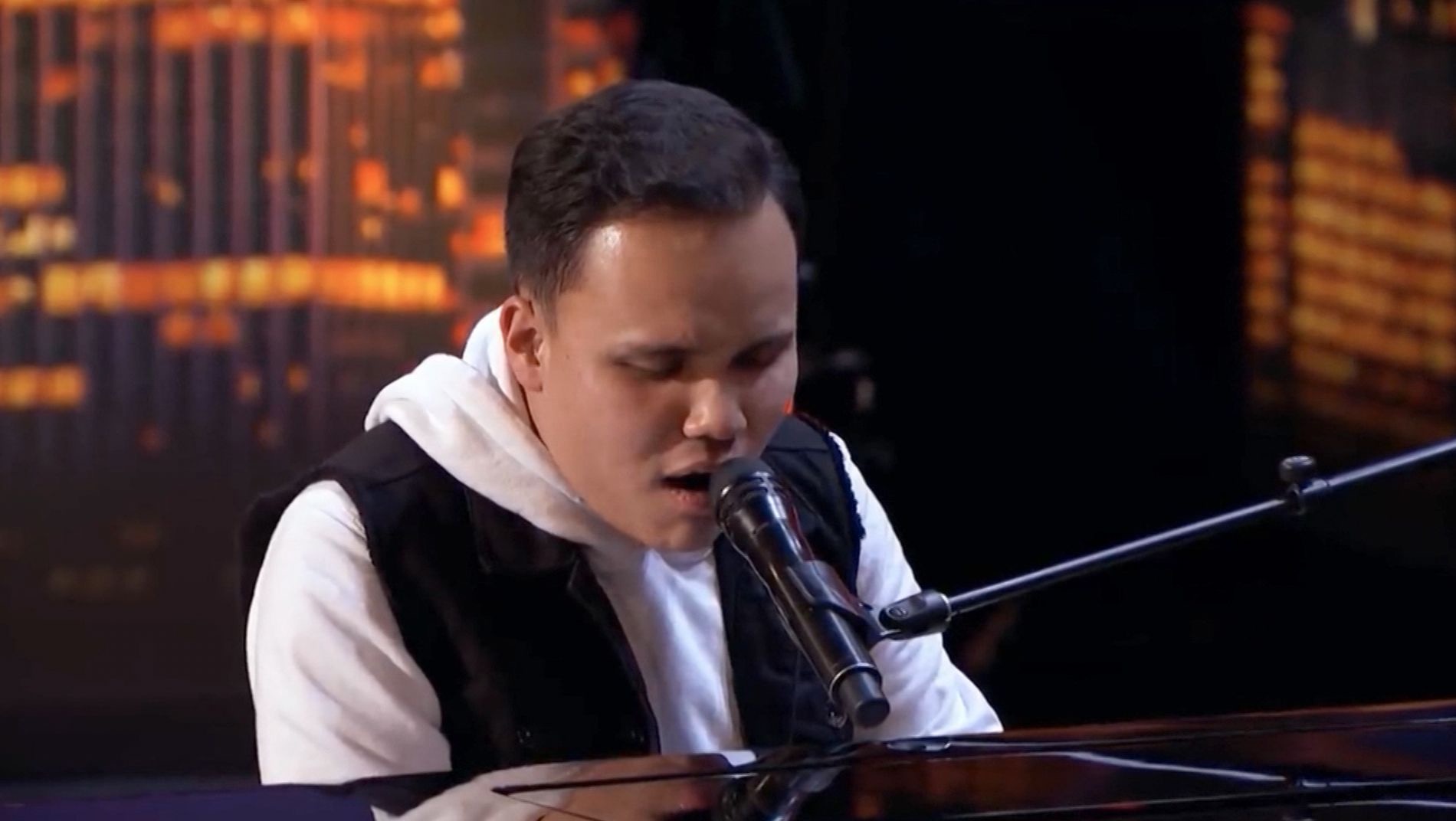
When Kodi Lee walked onto the America’s Got Talent stage in 2019, the moment began quietly. He was introduced as a singer and pianist from Southern California, and he took his place at the piano with his mother, Tina, beside him. Within minutes, the audition had become one of the season’s defining performances.
Lee performed “A Song for You,” written by Leon Russell and recorded by many artists over the years. It was a demanding choice for an audition because the song needs both restraint and feeling. The piano gave the performance a gentle beginning, then his voice gradually filled the theater. By the end, the atmosphere in the room had changed completely.
A quiet beginning on a very big stage
Big talent-show moments are often built around dramatic entrances, enormous production numbers, or elaborate surprises. Lee’s audition worked in the opposite direction. The stage was simple. The focus stayed on the piano, the melody, and the space between each phrase.
That simplicity gave the audience time to react in real time. At first, there was curiosity about what he would perform. Then came a few attentive smiles, followed by the unmistakable shift that happens when a room realizes it is watching something special. By the final notes, the crowd was standing.
At the time of the audition, Lee was 22. His mother explained that he is blind and autistic, and that music had become a central part of his life from an early age. The introduction gave viewers important context, but the performance itself quickly became the story. His piano playing was measured and confident, while his vocal delivery carried the emotion without forcing it.
That balance is one reason the clip traveled so far online. Viewers did not need to know every detail of the show to understand the moment. The performance begins with a person sitting at a piano and ends with a theater on its feet. The progression is easy to follow, even for someone seeing it for the first time years later.
The Golden Buzzer moment
The judges watched the audition closely as it unfolded. When Lee finished, the reaction became bigger than a normal round of applause. Gabrielle Union pressed her Golden Buzzer, sending him directly to the live shows. It was the first Golden Buzzer of that season.
The Golden Buzzer is designed for the rare moments that feel larger than a standard yes-or-no decision. In this case, it gave the audition a clear turning point: the performance had moved the audience, then it immediately changed Lee’s path in the competition.
For many viewers, the button press is remembered almost as strongly as the song itself. The scene has the structure of a complete short story: an introduction, a performance that changes the room, and a finish that confirms what the audience has just felt. That is exactly the kind of format that makes a talent-show clip easy to replay and share.
Watch the performance:
Why the performance stayed with viewers
The audition did not depend on a complicated setup. It did not need a large group of dancers, a visual stunt, or a quick surprise. The focus stayed where it belonged: on a singer at the piano and a song with a memorable emotional build.
That approach made the performance feel personal without asking the viewer to fill in too much. Lee’s playing established the mood first. Then the vocal brought more intensity, while the camera and the crowd reaction showed how quickly the room was responding. The result was a performance that felt intimate even on a major television stage.
Another reason it lasts is that the moment does not become dated easily. The style of the show may change from season to season, but a strong singer and piano performance can still connect with people many years later. New viewers can watch the audition without needing to know who else was competing or what the season looked like around it.
The response also speaks to the value of letting a performance develop. There is no rush to the biggest note in the opening seconds. The audition has a beginning, a middle, and a finish. That pacing allows the standing ovation to feel earned instead of expected.
From audition to the final result
Lee’s Golden Buzzer did not end the story. It put him into the live rounds, where he had to return week after week and show that the audition was not a one-time moment. He continued with performances including “Bridge Over Troubled Water,” “You Are the Reason,” and “Lost Without You.”
Each song called for a different mood. Some were quiet and reflective, while others asked for a bigger vocal finish. Across the competition, the consistent element was his connection to the piano. That instrument gave his performances a recognizable identity, even when the songs changed.
In September 2019, Lee won Season 14 of America’s Got Talent. The win completed the journey that had started with the first audition, but the original performance remains the clip that many people return to. It is the first chapter of the story, the moment before the outcome was known.
That matters because it keeps the audition fresh. Viewers already know he eventually won, but the first performance still contains the uncertainty of an opening night. It shows the audience discovering him at the same time as the judges. The later success adds context, but it does not replace the energy of that first reaction.
A moment that became part of the show’s history
Talent shows produce thousands of performances, yet only a small number become lasting reference points. Lee’s audition is one of those moments because it combines skill, emotion, and a clear story in just a few minutes.
It also represents the way a single audition can reach far beyond the theater where it happened. Once the clip moved online, people could discover it independently of the original broadcast. They could watch it at home, share it with friends, or revisit the Golden Buzzer reaction whenever they wanted.
For a new viewer, the appeal is simple: the performance asks for attention, then rewards it. A quiet beginning grows into a larger emotional moment without losing the personal feeling that made the first notes matter.