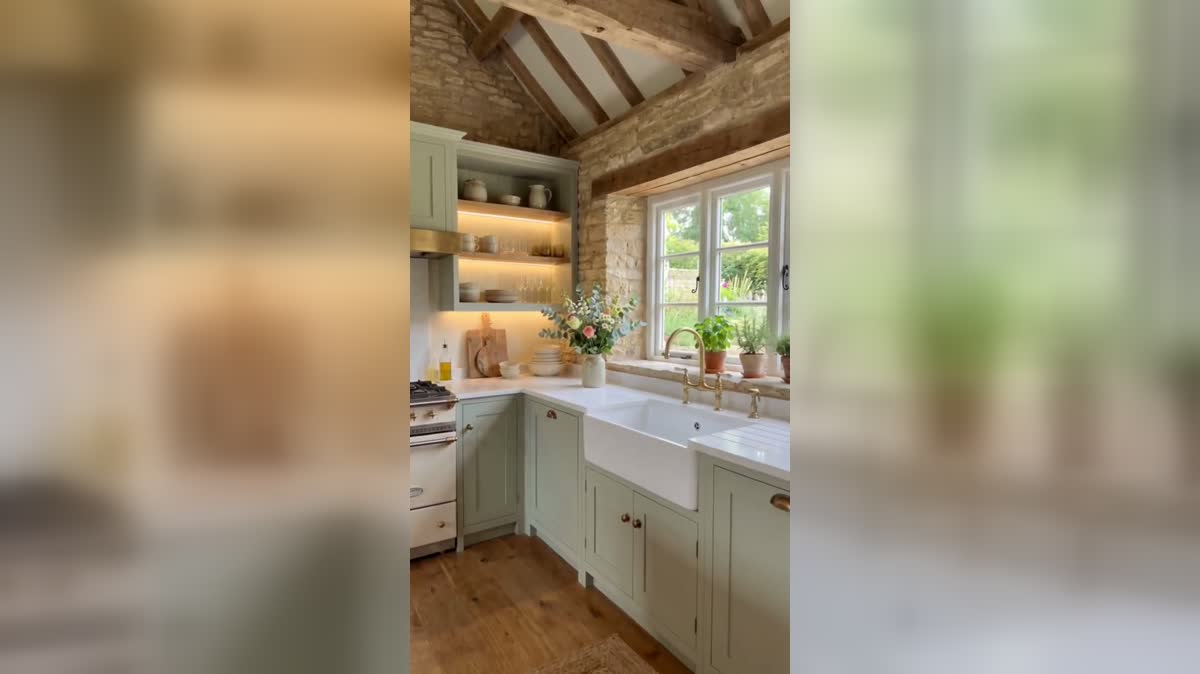
This kitchen does not chase attention, yet nearly every frame gives the eye somewhere beautiful to rest. Sunlight moves across pale worktops, fresh herbs gather beside an oversized farmhouse sink, and soft sage cabinetry sits beneath stone walls and centuries-old-looking beams. The room succeeds because it never asks its modern comforts to compete with its cottage character.
At first glance, the design feels effortless. Look longer, however, and a carefully controlled set of decisions begins to appear: old materials are allowed to remain visually strong, newer surfaces are deliberately quiet, and warm lighting connects the two. Here is why this sun-drenched cottage kitchen feels so calm—and how its best ideas can work in homes of many sizes and ages.
The Stone and Timber Set the Emotional Tone
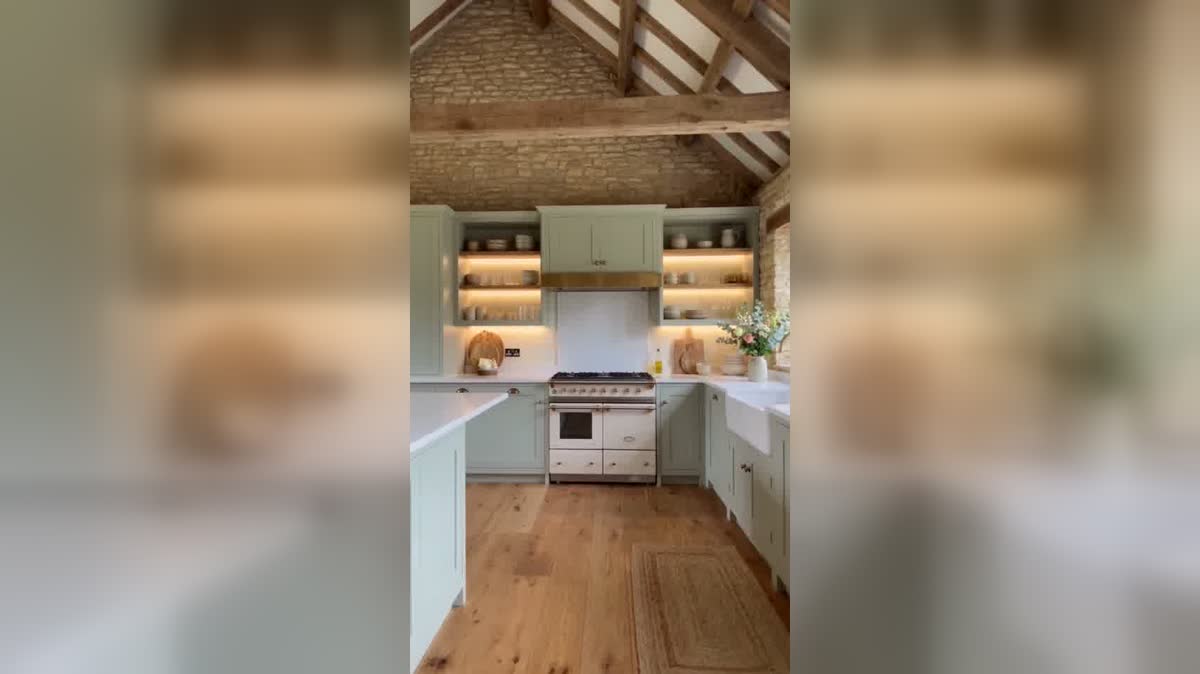
The most important elements are above eye level. Thick timber beams cross a steep ceiling while rough stone wraps the upper walls and the window opening. Together they give the room weight, age, and a strong sense of shelter. Instead of hiding those features behind plaster or paint, the design treats them as the room’s main artwork.
That decision changes everything below. Because the ceiling already provides texture and visual drama, the cabinets do not need elaborate moldings or a dark statement color. Their simple framed doors can stay restrained. The stone also brings warm tan, gray, and oatmeal notes into the palette, giving the painted cabinetry and white counters a natural context.
Why the Sage Cabinetry Feels So Natural
The cabinetry sits in the narrow space between green and gray. In shadow it reads as a muted neutral; in sunlight it becomes softly botanical. That flexibility is exactly what a textured cottage room needs. A brighter green could compete with the stone, while a cooler gray might make the old materials feel dusty. This sage tone connects the herbs at the window, the landscape outside, and the warm mineral colors overhead.
Small cup pulls and round knobs add a traditional note without making the kitchen feel themed. Their dark, aged finish has enough contrast to be useful, but it does not interrupt the broad calm surfaces. The effect is collected rather than decorated—a subtle distinction that keeps a cottage kitchen from becoming visually busy.
The Island Creates Quiet Modern Luxury
The large pale island is the most contemporary feature in the room. Its uninterrupted surface provides generous preparation space and reflects daylight deep into the kitchen. Yet it does not feel imported from a glossy showroom because its color stays close to the farmhouse sink and surrounding worktops.
Notice the absence of heavy styling on the island. There are no tall objects blocking sightlines and no clutter competing with the ceiling. This lets the countertop act almost like a pool of light. In a room rich with stone, timber, pottery, plants, and cabinet details, that empty space is not unfinished—it is a necessary visual pause.
Open Shelves Turn Storage Into Warmth
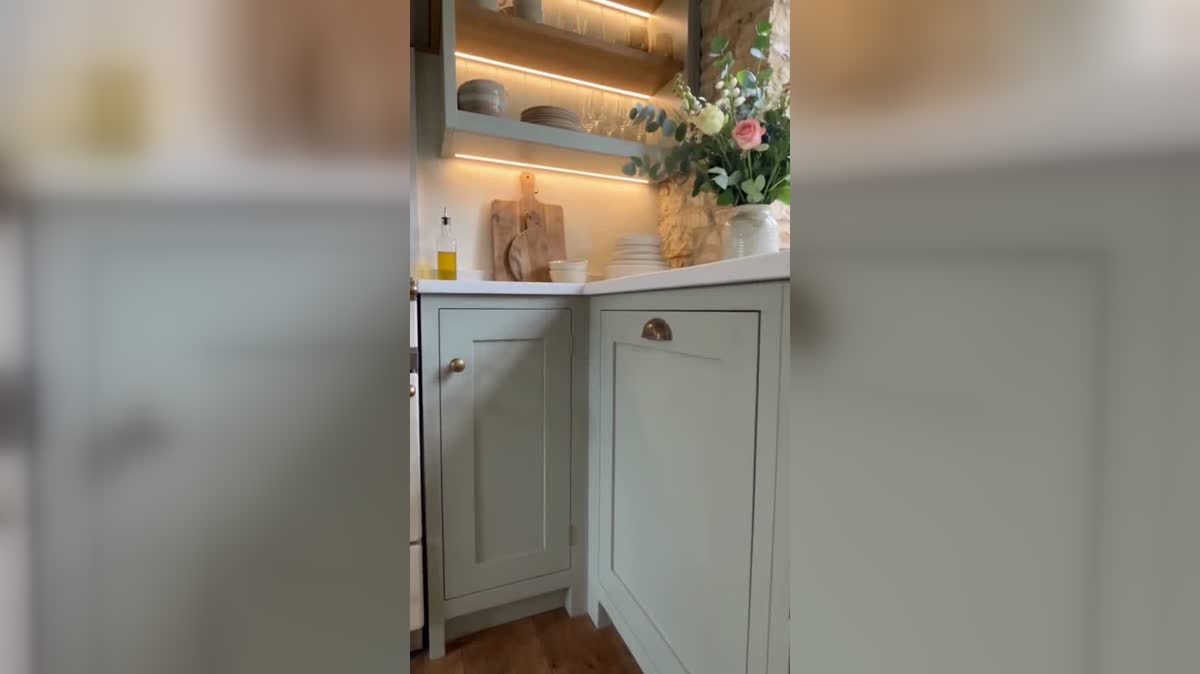
The open shelves beside the range hold a small, controlled collection of bowls and cups. Their warm integrated lighting creates a gentle glow that softens the surrounding stone. This is an especially effective detail because the room relies heavily on daylight; after sunset, those shelves can preserve the same welcoming atmosphere without flooding the kitchen with harsh overhead light.
The shelves also demonstrate an important rule: open storage works best when it repeats useful shapes and colors. The neutral ceramics form a quiet rhythm rather than a random display. Cutting boards lean against the backsplash below, adding vertical lines and natural wood without taking much working space.
The Farmhouse Sink Is More Than a Style Choice
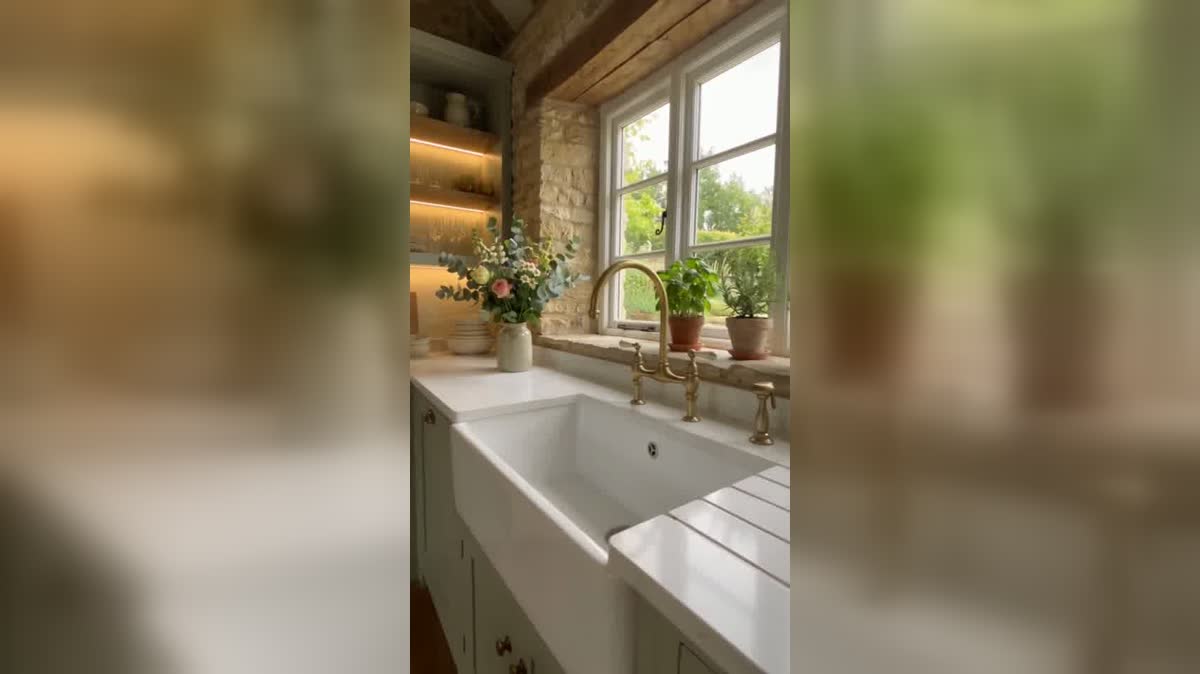
Beneath the broad window, the deep white sink becomes the room’s daily center. Its generous size suits the practical language of a cottage kitchen, while the apron front creates a clean block of white between the green doors. An aged-brass bridge faucet adds warmth and echoes the cabinet hardware without matching it too perfectly.
Placement matters just as much as material. Washing and preparation happen in front of the brightest view, so an ordinary task becomes part of the room’s pleasure. The wide window ledge holds terracotta pots filled with herbs, bringing fragrance, texture, and usable ingredients directly into the work zone.
Fresh Herbs Keep the Historic Look Alive
The plants are not merely decoration. They prevent the stone, timber, and traditional cabinetry from feeling like a preserved period room. Their uneven leaves and varied heights introduce movement, while the terracotta pots reinforce the warm earth tones already present in the walls and floor.
A loose arrangement of flowers adds a second, softer layer. The styling works because it feels temporary and lived-in. Nothing is positioned with rigid symmetry. In a room built from durable, permanent materials, these seasonal details supply freshness and personality.
The Color Palette Works in Clear Layers
The room’s palette can be understood in four layers. Warm brown timber and honey-toned flooring create the foundation. Stone adds oatmeal, sand, and soft gray. Sage cabinets bring the only substantial color, while white worktops and sink surfaces provide brightness. Brass, pottery, flowers, and herbs appear as smaller accents.
This layered approach explains why the kitchen feels colorful without becoming loud. No single finish is responsible for all the warmth. Instead, the colors support one another, and every material appears more than once. That repetition makes the design feel settled and intentional.
Practical Ideas to Borrow From This Kitchen
You do not need exposed stone walls or massive original beams to use the same design logic. Start with one warm natural material—wood flooring, a timber shelf, woven shades, or handmade tile. Pair it with a soft green that contains enough gray to behave like a neutral. Keep the largest work surface pale and relatively clear so it can reflect light.
Use warm lighting beneath or inside open shelves rather than depending only on ceiling fixtures. Group everyday ceramics by color, place useful herbs near the sink, and let a small number of aged-metal details repeat around the room. Most importantly, preserve breathing room. A cottage look becomes richer when every surface is not filled.
Why the Room Feels So Peaceful
This kitchen is memorable because it balances permanence with daily life. The beams and stone suggest history; the island and appliances make the room easy to use now. Herbs grow, flowers change, dishes move, and sunlight shifts, while the architecture remains steady around them.
That is the real luxury here. It is not perfection or excess. It is a room where old textures, practical routines, and quiet beauty are allowed to belong together—and where even an ordinary morning at the sink could feel like time well spent.