PART 3:
The first thing my new life gave me was a sound: the small, unbothered beep of the glucose sensor on my arm, telling the truth about my body every five minutes, whether anyone believed it or not.
I went back to school on a plan. Sensor, insulin, glucose tablets in my desk drawer and my purse and my coat pocket. Mrs. Abernathy — who had quietly written the number 44 into a report nobody read — simply nodded when I told her, the way people do when a thing they have suspected for a long time finally gets its name. My third-graders were told, in words for nine-year-olds, that Ms. Brooks’s body sometimes runs low on fuel and the beep means it’s snack time. Children, I have always found, believe evidence faster than adults do.
Tommy came home that Friday with his backpack held in front of him like a shield again, and that night, moving around the kitchen, I found out why the shield had gotten heavier.
I keep glucose tablets everywhere now — it’s the rule Dr. Kim set. There should have been a tube of them in the kitchen drawer. There wasn’t. There wasn’t one in my purse either, and when I asked Tommy — gently, the way you ask about a thing you already know is going to hurt — he went and got his school backpack, unzipped the front pocket with enormous care, and showed me four tubes of glucose tablets, lined up like treasure.
"Dad said they’re candy," he told the floor. "He said you pretend to be sick and eat candy so people feel sorry for you. He said if I keep them, you can’t pretend at Grandma’s house."
Nine years old, and already working a job in his parents’ war.
Then, because children tell the truth in the order it occurs to them, he added: "Grandma says you hide wine in juice boxes. I told Jayden at school juice boxes are for kids." He said it defending me. My son had been defending me at school, with the only fact he had, which was wrong in every direction.
The court had appointed a guardian ad litem for Tommy — Peter Walsh, a calm man whose whole job is the child’s side of the room. When I told him about the tablets, he did not gasp or perform. He wrote it down, and then he said the sentence I have carried like a stone and a lantern ever since:
"A nine-year-old should never be assigned to manage his mother’s medical condition — or her reputation."
His report came a week later. Tommy loved his father. He loved the garage, the pancakes, the terrible knock-knock jokes. He was not afraid of his dad’s house. He was afraid of handovers, because handover was when the adults’ weather changed, and he had learned to read it the way farm kids read a sky. He believed his job was to watch me for "pretending," and to watch himself for believing me, because believing me made Grandma’s face go a certain way.
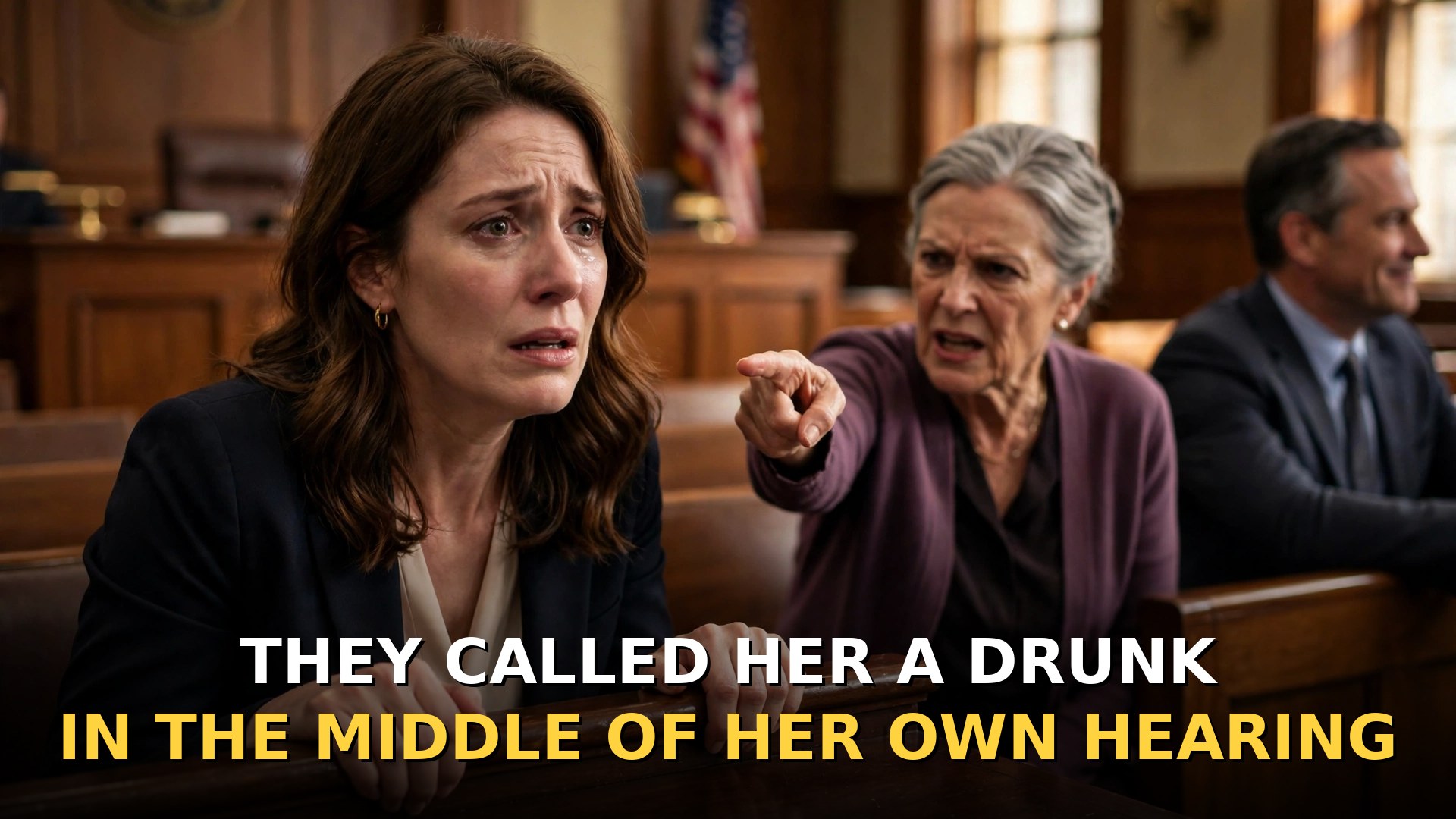
I built my timeline the way I build a lesson plan: dates down the left, facts down the right, nothing I could not prove. The first episode, last October, at a parent-evening — Mark told everyone I’d "had a glass too many"; I hadn’t had any; there’s a photo of me holding a water bottle with both hands to keep it steady. The school incident in April, with the number 44 in Mrs. Abernathy’s report. The urgent-care visit the same day, and the sentence about an endocrine work-up that Mark called "covering himself." The church picnic in June, where Ruth told the pastor’s wife I was "in one of my states" while I sat in my car with orange juice shaking in both hands, waiting for the world to level out. Mark’s filing, describing a documented medical question as a drinking problem. The courtroom. Thirty-eight.
Laid out in order, my year stopped looking like a woman falling apart and started looking like what it was: a body asking for help in the only language it had, and a family translating it into a sin because a sin was more useful to them.
The night before the new hearing, Tommy put one tube of glucose tablets back in my purse himself. "For court," he said, very seriously. "In case your fuel gets low." Then he asked if the judge knew about the number 38, and I said she would, and he considered that with the gravity of a small ambassador and said: "Good. Numbers don’t lie. That’s math."
Out of the mouths of third-graders’ brothers. I sat up half the night with my folders in a row on the kitchen table — medical records, messages, school reports, Peter’s report, my timeline — and for the first time since this began, I was not rehearsing how to seem believable.
I was just bringing the numbers.
