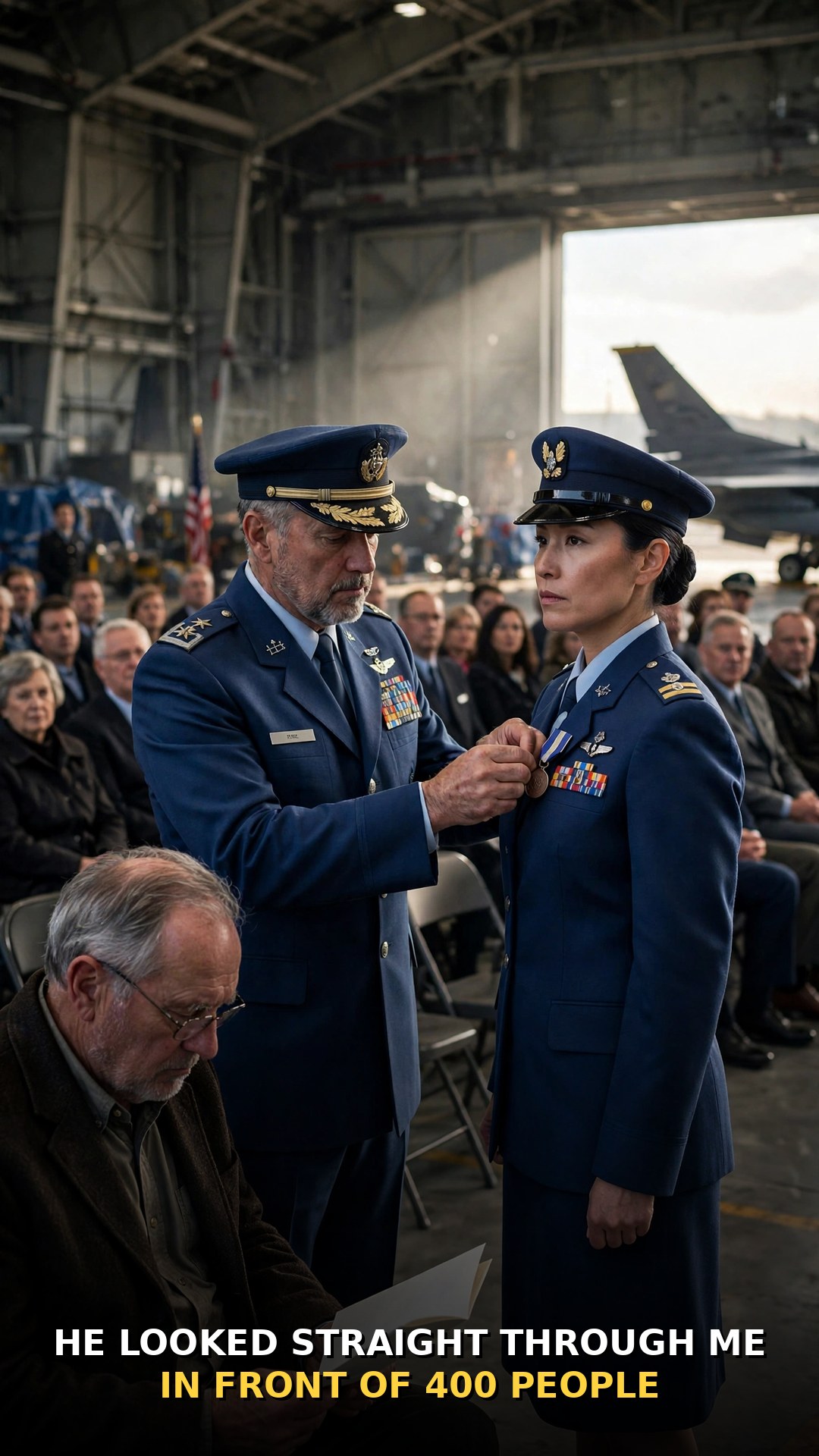
Part 2 — The Drawer in His Office
I was seventeen when I told my father I was joining ROTC.
We were in the kitchen of the house I grew up in, the one with the porch swing and the depot two miles down the road. My mother had been gone five years by then — a car accident on an icy road when I was twelve, the kind of phone call that splits a life into before and after. Dad had raised Tommy and me alone after that, running the firm by day and learning to braid hair and burn spaghetti by night, and doing both with the grim determination of a man who refused to let the house fall down.
"I’ve been accepted to the program," I said. "Full ride. I’ll fly."
He didn’t shout. That was never his way. He set his coffee down very carefully, like a man putting down something breakable, and said, "June. The firm needs you. I need you. Pilots are for other people’s daughters."
"I’m not other people’s daughter," I said. "I’m yours. And I’m going."
He said, "Then go."
That was the last real conversation we had for fifteen years. Oh, there were birthday cards — short, polite, signed "Dad" — and a Christmas check every year that I never cashed, because cashing it felt like accepting a settlement. He never called. I never called. Two proud people, each waiting for the other to blink, while the years stacked up like pallets in his warehouse.
Tommy, to his eternal credit, refused to pick a side. He stayed, learned the firm, married a kind woman named Priya, had two kids, and kept both of us in his life by the simple method of never repeating what either of us said about the other. The envelope at the ceremony was the first time he’d broken that rule.
That evening, over the phone, he told me about the drawer.
"Dad’s office," he said. "Bottom drawer of his desk. It’s locked, but I’ve seen inside it twice — once when he was at the doctor, once when the depot flooded and we moved everything. June, it’s full of you."
Newspaper clippings. Every article about my squadron, every promotion notice, every photo from every ceremony — including ones I didn’t know had been photographed. A program from my commissioning, folded and refolded so many times the creases were soft. A printout of a weather report from the night of the flood flight, with a circle around the wind speed and a note in the margin: "She flew in this?"
"He never missed a thing," Tommy said quietly. "He just never let you see him watching."
And then he told me the other thing — the thing that rearranged fifteen years in my head in about ten seconds. Three years ago, the firm had been offered the biggest contract in its history: a regional retailer wanted Calloway Freight to run double shifts through the winter holidays. Dad turned it down. The retailer went elsewhere. Tommy asked him why, and Dad said, "Because a tired driver is a dead driver, and I won’t sign a paper that gets somebody’s kid killed for a Christmas bonus."
I sat with the phone against my ear and thought about the commendation in its case, and the citation’s words — composure, judgment — and where I might have learned those things. Not from the Air Force alone. From a man who turned down a fortune because he wouldn’t gamble with other people’s lives, and who had spent fifteen years watching his daughter from a locked drawer because he didn’t know how to say the one true sentence out loud.
I was still turning that over when Tommy called again, two weeks later, with a different kind of news. His voice was tight in the way it only gets when he’s trying not to scare me.
"June," he said. "Dad fell at the depot. He’s in the hospital. It’s his hip, and — he’s asking for you. Not by name. He just keeps asking the nurse if ‘the girl who flies’ has called."
I was on a plane home within four hours. What he said to me in that hospital corridor — the truth he’d carried since before I was born — changed everything I thought I knew about my father. PART 3 is coming.
