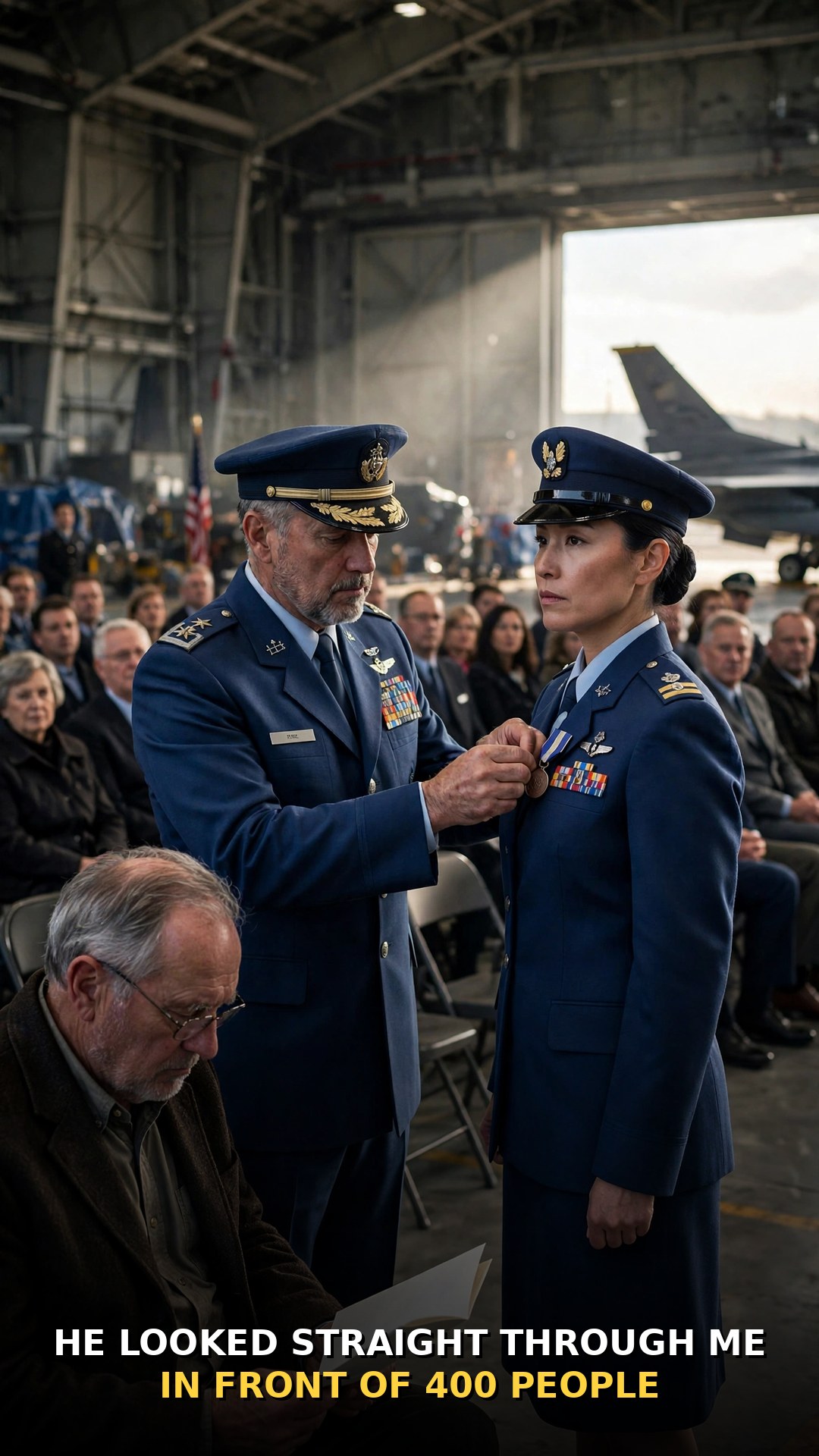
Part 3 — The Reason He Never Came
The hospital corridor smelled like antiseptic and bad coffee, and my father looked smaller in the bed than any man who runs forty trucks has a right to look. His hip was pinned, his pride was bruised worse, and he was furious at everyone — the nurse, the doctor, Tommy, and especially himself for falling off a loading dock like a rookie.
"You didn’t have to come," he said when I walked in. It was the first thing he’d said to me in person in fifteen years, and it landed exactly like he meant it to hurt.
"I know," I said. "I came anyway."
He looked at me for a long moment — really looked, the way he hadn’t in that hangar — and something in his face gave way. "You look like your mother when she was mad," he said. "Same jaw."
Tommy had gone for coffee, which I suspect was deliberate, because what Dad said next came out slow, like a man reading a manifest he doesn’t want to sign.
"When I was twenty-four," he said, "my younger brother Eddie got his pilot’s license. He was going to fly charters, then commercial. He had this laugh — you never met him, but Tommy has it, that same stupid laugh. One August morning his plane went down in a training flight. Engine failure, they said. There was nothing anybody could have done, and that never once made it easier."
He stopped, and stared at the ceiling tiles.
"Then your mother. Twelve years old you were, and I came home to a house with no wife in it and two kids asking me where she went. I didn’t have an answer then either."
He turned his head toward me. "So when you stood in my kitchen at seventeen and told me you were going to fly, June — I didn’t hear a career. I heard a countdown. I thought if I kept you on the ground, I’d keep you. And when you went anyway, I thought… well. I thought if I didn’t watch, it wouldn’t hurt when the call came."
There it was. Fifteen years, explained in a hospital room at midnight: not disappointment. Fear. The kind of fear that dresses itself up as principle so a man doesn’t have to admit he’s terrified.
"Dad," I said, and my voice did something I didn’t expect — it went gentle, the way it goes with a spooked animal or a new pilot on her first solo. "I’ve flown fifteen years. I’ve flown in weather that scared me, and I’ve brought every crew home. You didn’t keep me safe by staying away. You just made me fly it alone."
He was quiet for a while. Then he said, "Your brother showed you the drawer, didn’t he."
"He did."
"That boy can’t keep a secret to save his life." But he was almost smiling. "I kept every one of them. Every clipping. I used to read them at the depot before the drivers came in, so nobody would see."
"Why didn’t you ever call?" I asked. It was the question, the only one that had ever mattered.
"Because," he said, "every time I picked up the phone, I heard myself saying ‘come home’ when what I meant was ‘don’t die.’ And I knew you’d hear the first one. So I said nothing, and told myself that was the same as letting you be free. It wasn’t. It was just me being a coward with good posture."
We sat there until the nurse came to check his vitals, and then Tommy came back with three coffees, and Dad — my father, who had not asked me for anything in fifteen years — said, "June. The firm’s fortieth anniversary is next month. Forty years. I’d like you to come. Not to make a speech. Just to come. And if you’re willing… I’d like to tell them the truth. About Eddie. About why I was the way I was. In front of everybody, so there’s no more drawer."
I said yes before he finished the sentence.
What happened at that anniversary dinner — in front of his drivers, his customers, and the whole town that had watched our family from the outside for years — is the part Tommy still tells at barbecues. PART 4 is coming.
