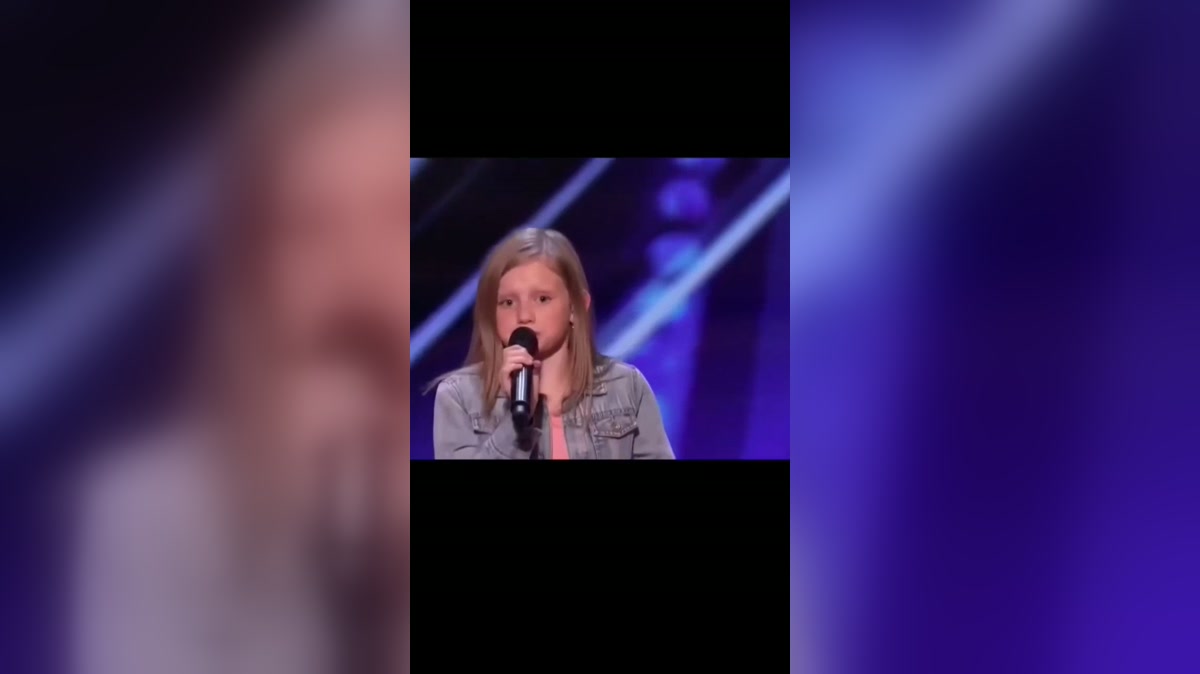
Ansley Burns was 12 when Simon Cowell stopped her America’s Got Talent audition in the middle of Aretha Franklin’s “Think.” For a young singer standing in front of four judges and a packed theater, that interruption could have ended the moment. Instead, it revealed the part of Ansley’s ability that the backing track had been hiding.
The clip is often framed as Simon stopping a child for a mysterious reason. The actual explanation was direct: he disliked the accompaniment and believed it was working against her voice. His solution was intimidating but simple—start again without it.
The backing track created the wrong kind of pressure
“Think” needs rhythmic drive. Aretha Franklin’s recording is powered by a band that leaves room for the vocal to punch through. The audition track was busy and overly cheerful, with a karaoke-like feel that flattened the song’s urgency. Ansley was singing loudly enough, but she was fighting the arrangement instead of leading it.
Simon’s interruption was blunt because it changed the conditions in public. From a musical perspective, however, the criticism was aimed at the track rather than the singer. Local coverage from Ansley’s home state of South Carolina reported his description of the accompaniment as “horrible,” followed by his suggestion that she try the song a cappella.
Starting again required a different skill
Singing without accompaniment removes both obstacles and support. There is no track to drown out the voice, but there is also no harmony to confirm pitch, no drum beat to mark time, and no instrumental energy to carry a hesitant entrance. Ansley had to choose a key internally, count herself in, and make the audience feel the groove through phrasing alone.
She looked shaken, which made the recovery more impressive. Simon offered her a drink from his cup and jokingly called it magic water. After a brief pause, Ansley began again. Her voice immediately sounded more forward. The words became clearer, and the natural Southern character in her delivery was easier to hear.
The second version made the audition personal
Without the track, Ansley had to generate momentum herself. She used sharper consonants, held certain syllables a fraction longer, and let the crowd’s clapping become an informal rhythm section. The performance was not a note-for-note recreation of the original song. It was a demonstration that she could adjust in real time while nervous.
All four judges voted yes. In a later interview, Ansley said she was grateful for the interruption because the music had been drowning her out. That response shows why the moment endured: what looked like a setback became useful feedback, and she could hear the difference herself.
What happened after the audition
Ansley faced a similar interruption during Judge Cuts and was eliminated, but her season was not over. Simon selected her as a wildcard for the live quarterfinals. She returned with a performance free from the kind of backing-track problem that had defined her earlier appearances, though she did not advance to the semifinals.
Her original audition remains the clearest statement of her strengths. The important lesson is not that every singer sounds better a cappella; many do not. It is that an arrangement should support the performer rather than compete with them. When the production disappeared, Ansley’s pitch, personality, and nerve became easier to evaluate.
What another young singer can learn from it
The audition offers a practical checklist. Test a backing track at the volume it will have in the room, not only through headphones. Make sure its key sits comfortably across the entire song. Rehearse at least one verse without accompaniment so an unexpected technical problem does not erase the performance. Most importantly, know the lyric and rhythmic shape well enough to restart without copying the exact arrangement.
Ansley did not have time to redesign the song. She relied on preparation already stored in her ear and body. That is why the recovery felt genuine rather than staged: the interruption changed the presentation, but it did not remove her knowledge of the music.
Watch the full audition
Sources
- WYFF 4: Ansley Burns’ audition and four yes votes
- MEAWW: interview with Ansley after the audition
- Entertainment Tonight: Ansley returns as a wildcard
Analysis based on the supplied video excerpt and the full performance and reporting linked above.
