Part 4 — A Phone Call Every Sunday
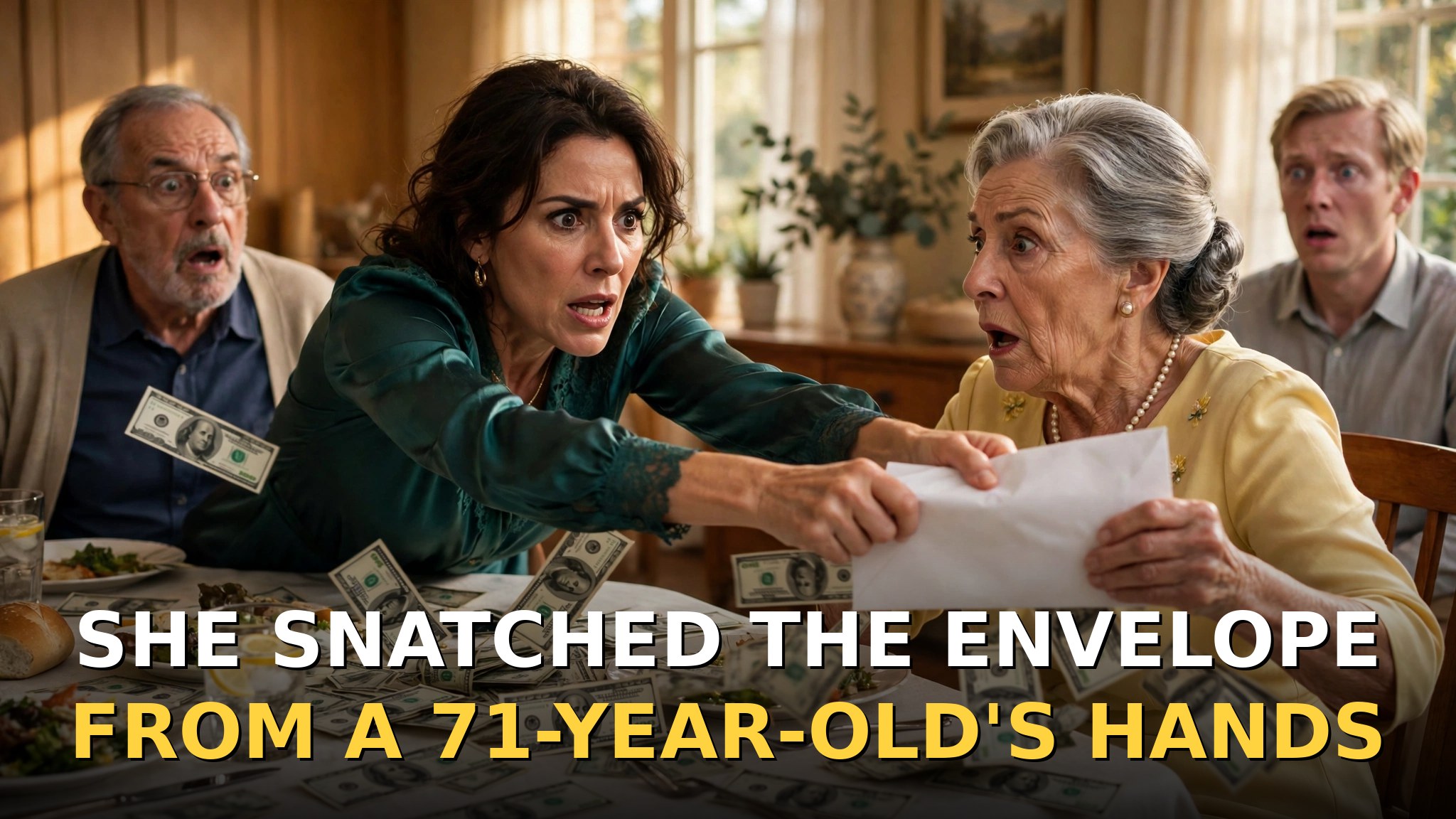
They left in pieces, the way a scheme does. Ray and Darlene went first, carrying nothing — not the money, not the day, not one single thing they’d walked in expecting to hold. Kayla packed a bag that night at her sister’s direction, over the phone, in the flat voice of a woman reading weather from another state. The marriage didn’t end at my table. Marriages don’t end in a day. It ended later, in lawyers’ offices and paperwork and uncomfortable truths said out loud in rooms with tissues on the table. But it turned at my table. I watched it turn.
David drove me home himself. The whole way he kept both hands on the wheel like a man in a driving test, and at my door, in the porch light, he said it:
"I don’t want you living alone anymore, Mom."
"David." I patted his cheek, the way I have since he was four and afraid of thunder. "I have lived alone in a house full of my own thoughts for seventy-one years less about twenty. I am very good at it. What I don’t want — what I will not do again — is live unheard. There’s a difference, and you’re looking at it."
Sundays came back like a tide deciding to be kind. First it was a phone call — a real one, an hour long, with his feet up in another state of being. Then it was groceries carried in without being asked. Then flowers, twice, the second time with an apology for the first time being grocery-store flowers, which made me laugh until my eyes ran. Then coffee at my kitchen table, where the recorder used to live under the flowerpot, and where there is no recorder anymore, because a woman who is believed doesn’t need one.
He tells me things now. Real things. The promotion. The paperwork. A man at work whose wife talks to him the way Kayla talked, and how David sat him down in the parking lot one day and said the thing somebody should have said to him three years ago: "Check the paper. Not her face. The paper."
And one spring afternoon he brought Noah.
My grandson is eight, all elbows and questions, and he hugged my waist at the door like he’d been saving it, and at dinner — pot roast, his great-grandmother’s recipe, the one from the house Kayla hoped I’d be moved out of — he looked around my table with the seriousness of a small judge and asked the question that the whole rest of this story hangs on.
"Grandma. Are you rich?"
