Part 5 — The Richest Person He Knows
"Noah," his father said, before I could answer, "your grandma is the richest person I know."
My grandson considered this with gravy on his chin. "But you don’t have a boat."
"No, baby," I said. "I don’t have a boat. I have something money can’t buy."
"What’s it called?"
"A family that finally learned how to tell the truth."
He nodded like that was a satisfactory asset class and went back to his pot roast, and David looked at me over his son’s head with his whole heart in his face, and I thought: there it is. There’s the inheritance. It’s not in an envelope. It never was.
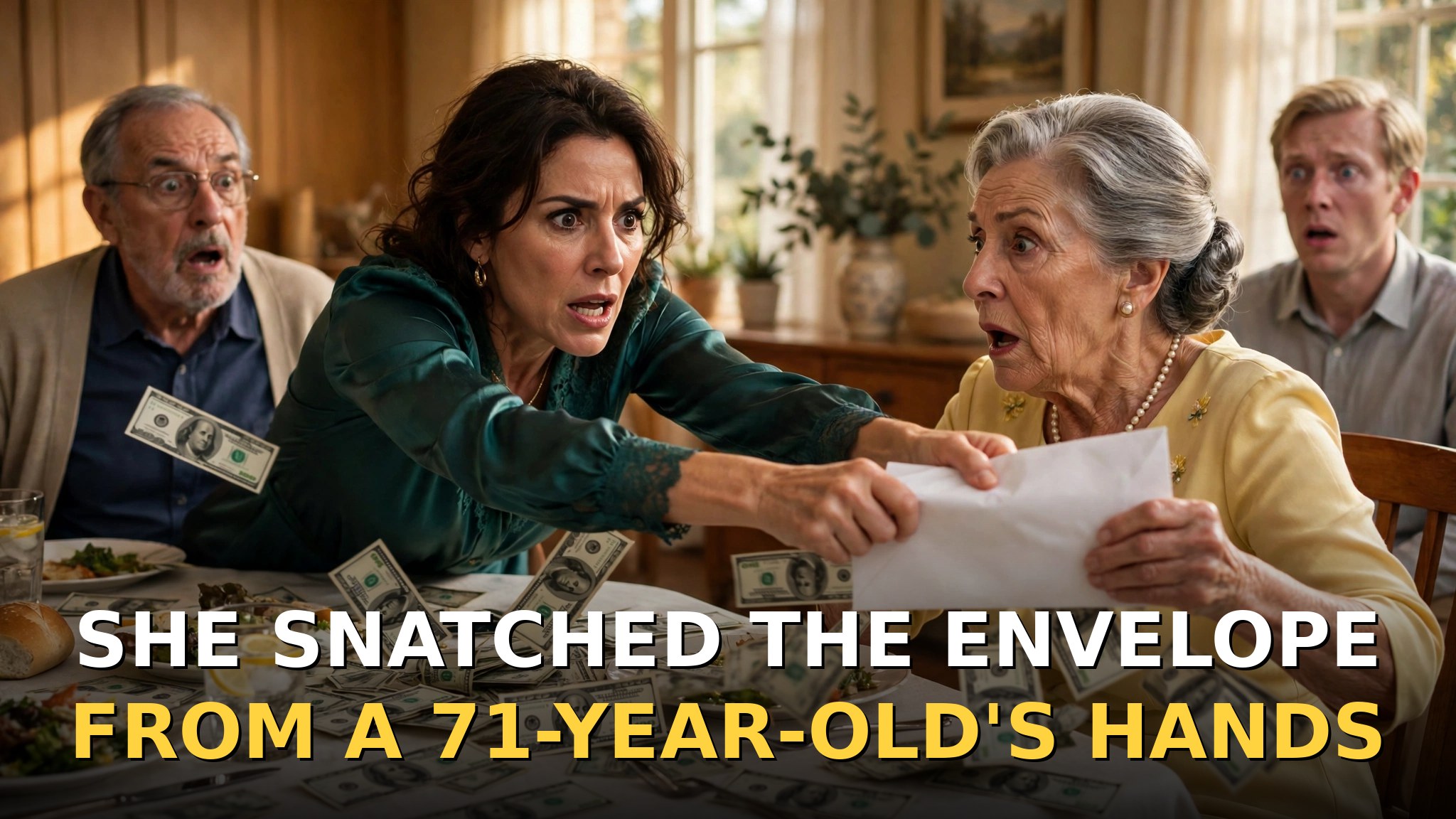
The next Mother’s Day, my son did not bring me money. He brought me a bank book — a little blue savings book, the old-fashioned kind, in a white envelope, and inside it an account in Noah’s name with my name beside it as the keeper, and a balance that made me sit down at my own table.
Twenty-five thousand dollars. Real this time. Saved the same slow way, a year of Sundays’ worth of overtime and doing without, not to buy me peace — I’d told him plain I already had peace, and it wasn’t for sale — but to start his son’s education fund in the one place he trusted to guard it.
"It’s the something special," he said. "You said buy something special. Education’s special. You taught me that with a mop, Mom. Every night for six years of school, you taught me that with a mop."
I put that bank book in the drawer beside the little black recorder. I keep them together on purpose. One is what they tried to take. The other is what stopped them. A woman my age doesn’t need much jewelry. Those two things are mine.
Noah is older now, and he doesn’t remember the envelope, or Kayla’s face, or the day his grandmother laughed at a table full of movie money. What he remembers — what he tells people, his father tells me, with a pride that has some ache in it — is this: "My dad learned a hard lesson about trust, and he taught it to me early, so I wouldn’t have to learn it the way he did. He said: never let anyone convince you that kindness makes you weak. The kindest person I ever knew cleaned office buildings at night and was stronger than anybody."
I cleaned other people’s dirt for thirty-eight years. Floors, glass, fingerprints that weren’t mine. It took me until I was seventy-one to clean the dirt out of my own family — and I want every woman reading this to hear me: it is not too late to start, and you do not need to raise your voice, and you do not need anybody’s permission. You need the truth, and paper, and one person who believes you, and the nerve to set it all on the table and say: read.
My son came home. That’s the whole story. Everything else was just the way back. THE END
