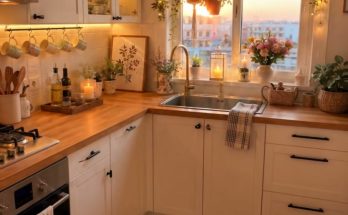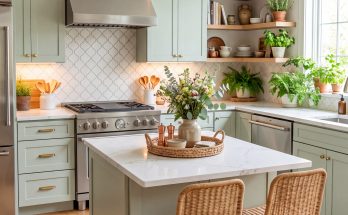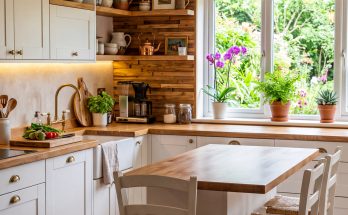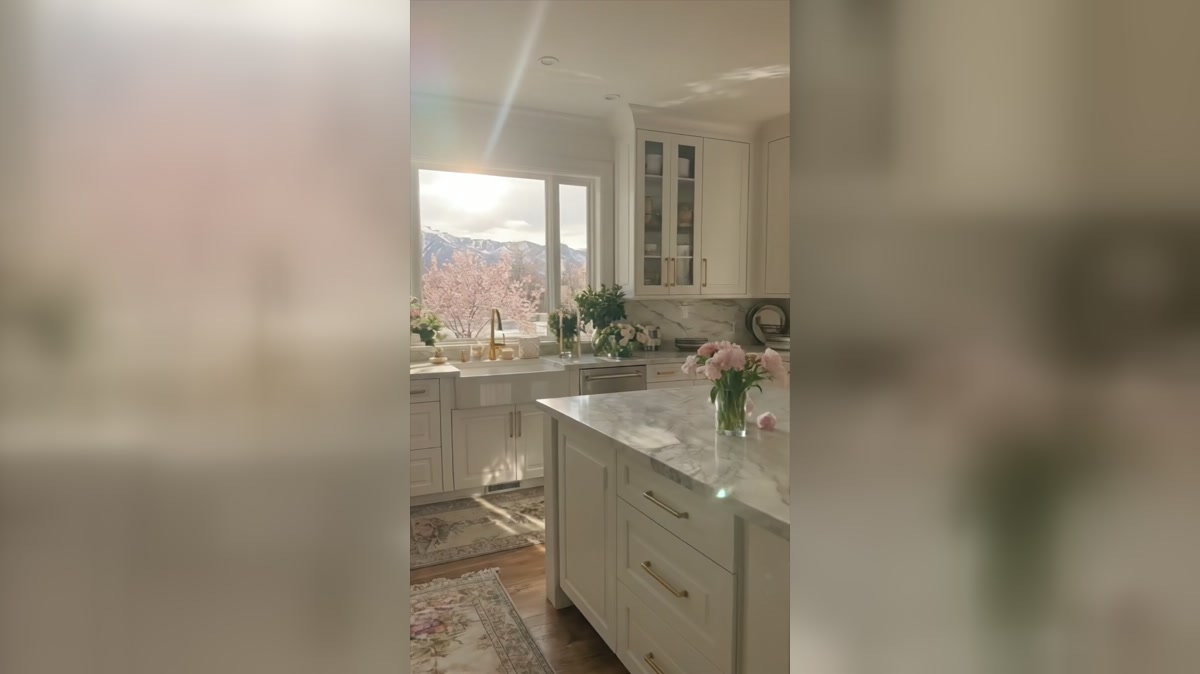
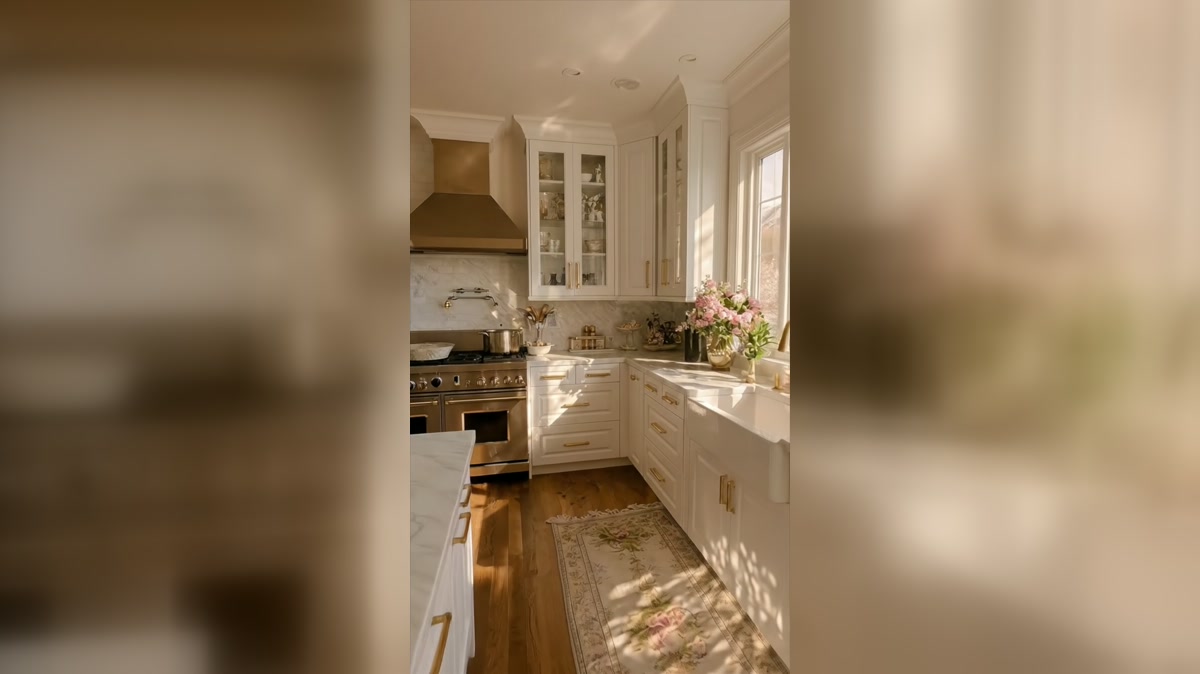
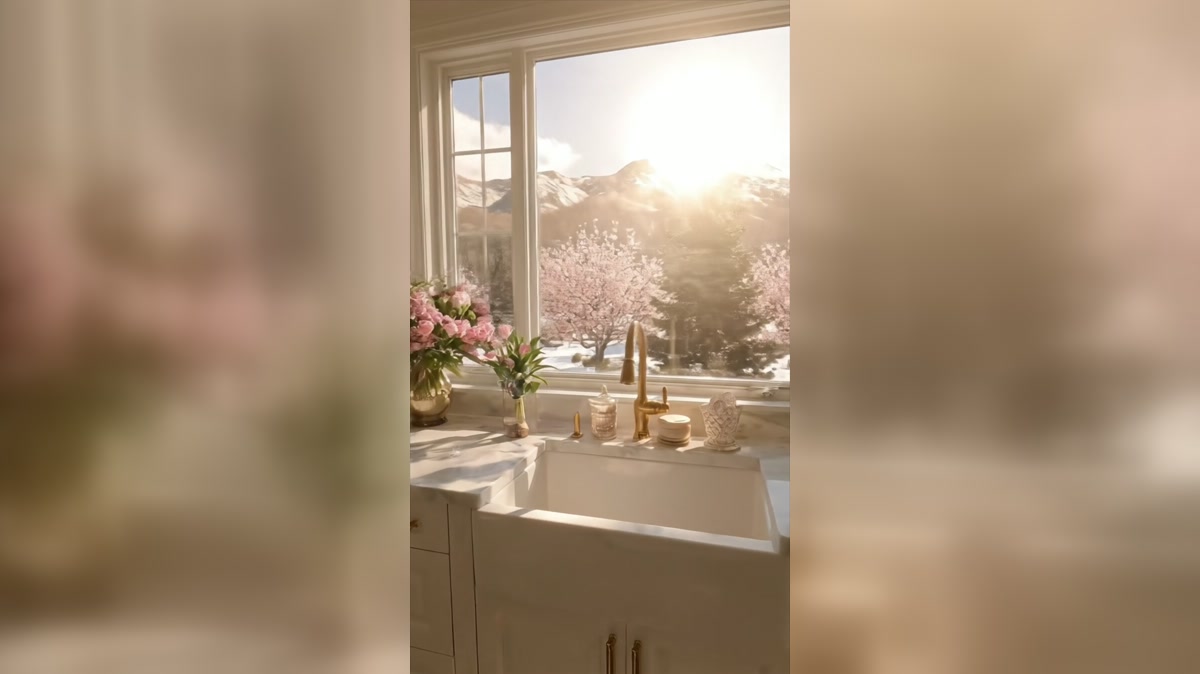
Some kitchens are designed around an island. Others are designed around a range, a collection of cabinets, or a dramatic stone surface. This one is designed around a view. Beyond the sink, flowering trees and distant mountains fill the window, while morning light spreads across white cabinetry, marble-patterned counters, warm brass, and bouquets of soft pink flowers.
The room feels romantic, but it does not become sugary or theatrical. Its strongest decorative element already exists outside the house. The interior responds by staying quiet, reflective, and carefully layered.
The window is treated like a living artwork
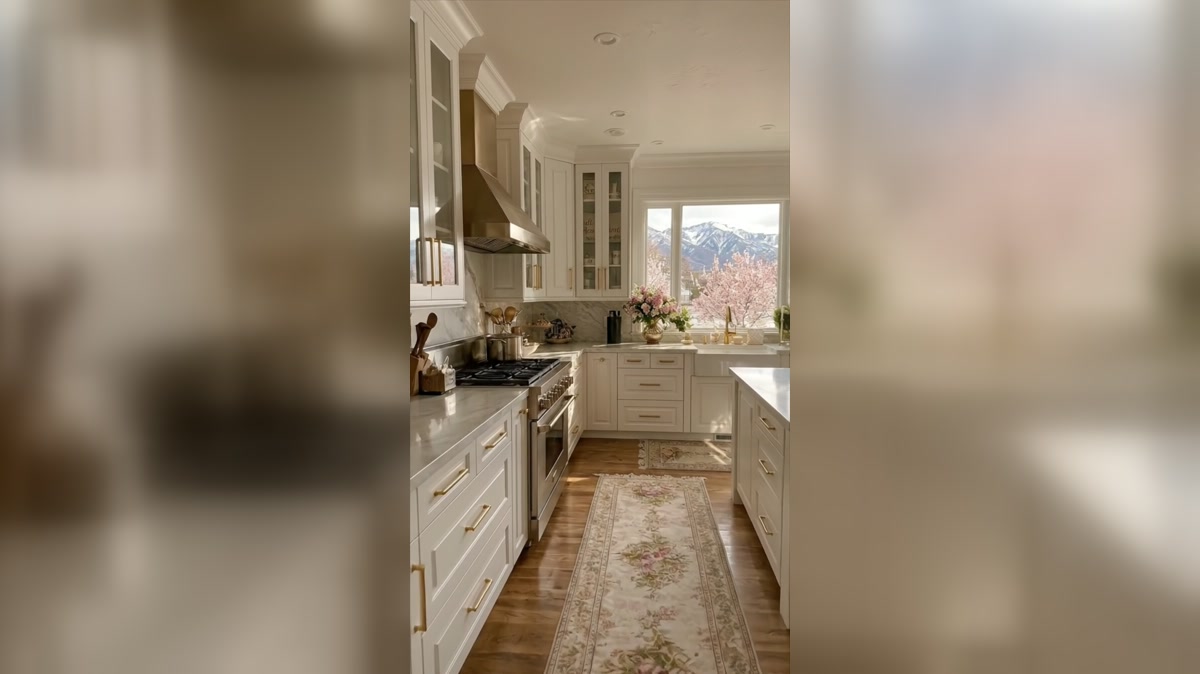
The sink sits directly beneath the main window, making the landscape part of an everyday task. This is more than a pleasant view; it sets the visual hierarchy of the room. Cabinetry frames the opening without competing with it, and the island stops low enough that the view remains visible from deeper in the kitchen.
Because the mountain and flowering trees provide so much depth and color, the interior does not need a feature wall. The window performs that role, changing with the weather, season, and time of day.
Why the white palette works here
White cabinets and pale stone bounce warm sunlight around the room. Instead of creating a stark effect, the light takes on the gold and blush tones from the landscape and accessories. The cabinetry has framed doors and crown details, which bring soft shadow lines and a traditional sense of craftsmanship.
Glass-front cabinets break up the solid runs and allow carefully arranged dishes to become part of the composition. They also make the upper level feel less heavy near the window.
Brass creates a gentle glow
Brass appears in the faucet, cabinet pulls, range details, and small accessories. The finish is warm rather than mirror-bright, so it relates naturally to the sunlight. Repeating it throughout the room creates continuity without turning the hardware into a theme.
The brass faucet is especially effective against the white farmhouse sink. It forms one warm focal point at the center of the window and helps connect the interior to the golden morning light outside.
Flowers are used as color architecture
Pink and white flowers appear in several zones rather than in one oversized centerpiece. Bouquets near the sink, on the counter, and at the island distribute the romantic color across the room. Because the background stays neutral, even small arrangements have presence.
The choice of blush pink is not random. It echoes the flowering tree outside, making the interior and landscape feel synchronized. This is an elegant way to decorate seasonally: instead of introducing unrelated colors, bring the tones visible outdoors into a few movable accessories.
The runner softens the working aisle
A long floral runner stretches through the central work zone. It adds comfort underfoot, introduces a traditional pattern, and visually leads toward the window. Its faded palette prevents it from competing with the marble-patterned counters.
Wood flooring around the rug supplies the room’s main natural warmth. The medium tone is deep enough to ground the white cabinetry but light enough to remain airy in strong daylight.
The island stays deliberately quiet
The island is broad and useful, yet it does not rely on a contrasting cabinet color. Keeping it white allows the window view and flowers to remain the stars. Wide drawers provide practical storage, and the pale surface reflects changing light throughout the day.
This approach is worth noting for rooms with exceptional views: the island does not always need to be a statement. Sometimes the most sophisticated choice is to let a major element recede.
How to create a romantic kitchen without overdecorating
- Choose one natural view, window, or architectural feature as the main focal point.
- Use warm white cabinetry with a low-sheen finish to soften daylight.
- Repeat aged or satin brass in small functional details.
- Bring one color from the outdoor view into flowers, art, or textiles.
- Add a faded runner for softness and pattern, but keep large surfaces calm.
- Use glass-front cabinets sparingly to break up solid upper storage.
Why the room feels timeless
The design combines familiar elements—framed cabinetry, a farmhouse sink, warm metal, flowers, and a runner—without pushing them into a heavily themed style. Modern proportions and an uncluttered island keep the room fresh.
Its romance comes from atmosphere rather than decoration: light, a distant landscape, reflected warmth, and a few natural colors carried indoors. That is why the kitchen feels special now and should continue to feel special long after a particular trend has passed.