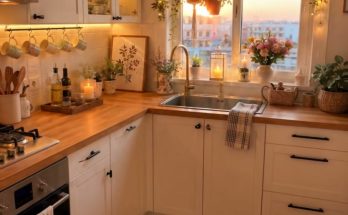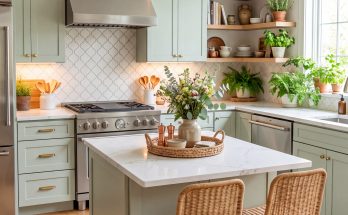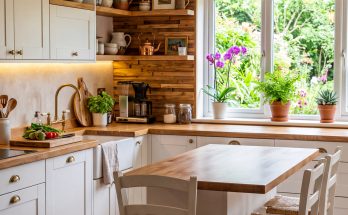
This kitchen does not feel staged for a silent photograph. It feels ready for flour on the worktop, coffee beside the mixer, warm cakes cooling on a rack, and someone reaching for a favorite mug. White cabinetry gives the room order, but the personality comes from wood counters, black hardware, hanging cups, a floral mixer cover, ceramic canisters, and the small rituals of baking.
The room is proof that a pale kitchen can still feel deeply personal. It simply needs signs of real use and a material palette that becomes warmer with age.
The worktop creates the cozy foundation
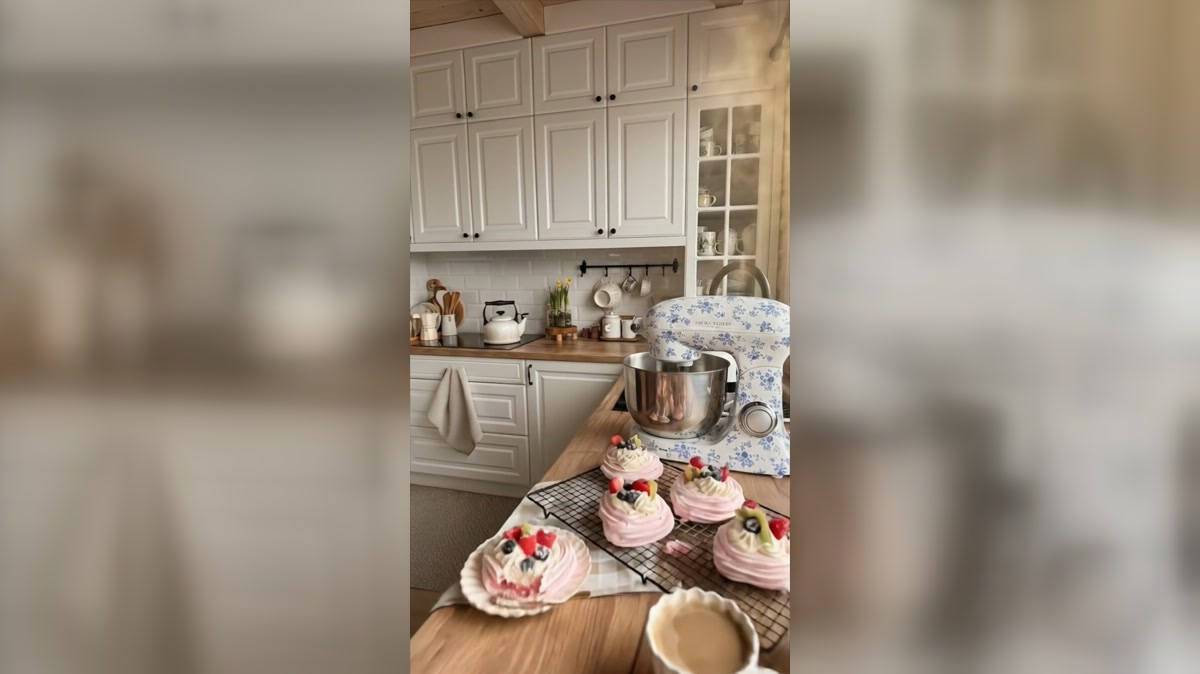
Timber counters run around the perimeter and across the compact central worktable. Their visible grain immediately softens the white cabinet doors. Unlike polished stone, wood has a tactile, domestic quality that suits baking: it feels warm, forgiving, and familiar.
The same material on the worktable makes the center of the kitchen feel like a piece of furniture rather than a fixed block. That distinction matters in a compact room, where a heavy island could make movement feel restricted.
Storage is practical but still decorative
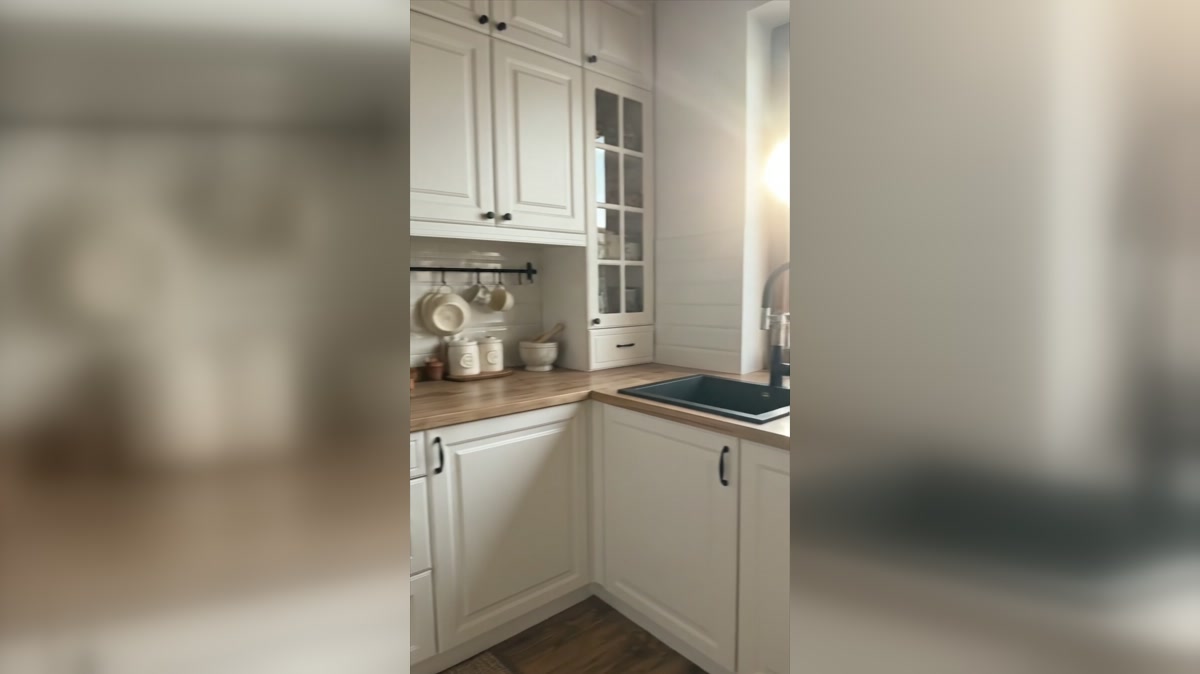
Most storage remains behind framed white doors, keeping the overall room calm. A narrow glass cabinet displays cups and dishes, adding depth without exposing every item. A simple black rail holds mugs and small tools close to the work surface.
This is a balanced approach to open storage. The frequently used pieces remain visible and easy to reach, while less attractive supplies stay hidden. The black rail also connects visually to the dark sink, faucet, and cabinet hardware.
The sink corner has real contrast
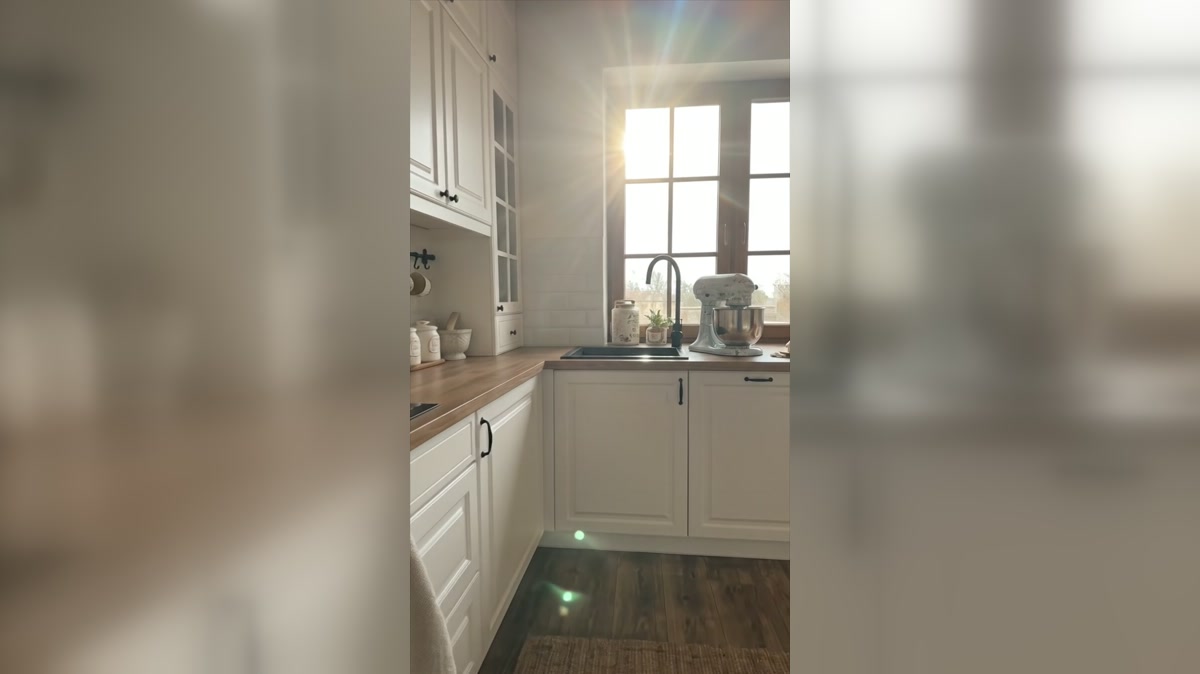
A deep dark sink and tall dark faucet create a strong focal point beneath the bright window. The contrast is functional as well as visual: it defines the wet zone and prevents the room from becoming one continuous field of white and tan.
Sunlight falls directly into this corner, so the dark fixtures never feel heavy. Instead, they sharpen the composition and repeat the small black handles around the room.
The baking station tells a story
The mixer, cooling rack, piped cakes, teacup, and floral fabric cover turn the worktable into the emotional center of the kitchen. These items are useful, but their colors and forms also create a still life. Soft pink icing, berries, blue floral print, and warm ceramic tones introduce personality without repainting a single cabinet.
This kind of styling works because it is connected to an activity. Decorative objects that support real routines feel more natural than items placed only to fill space. If baking is central to a household, the mixer and tools deserve a permanent, accessible home.
White cabinets gain depth from traditional details
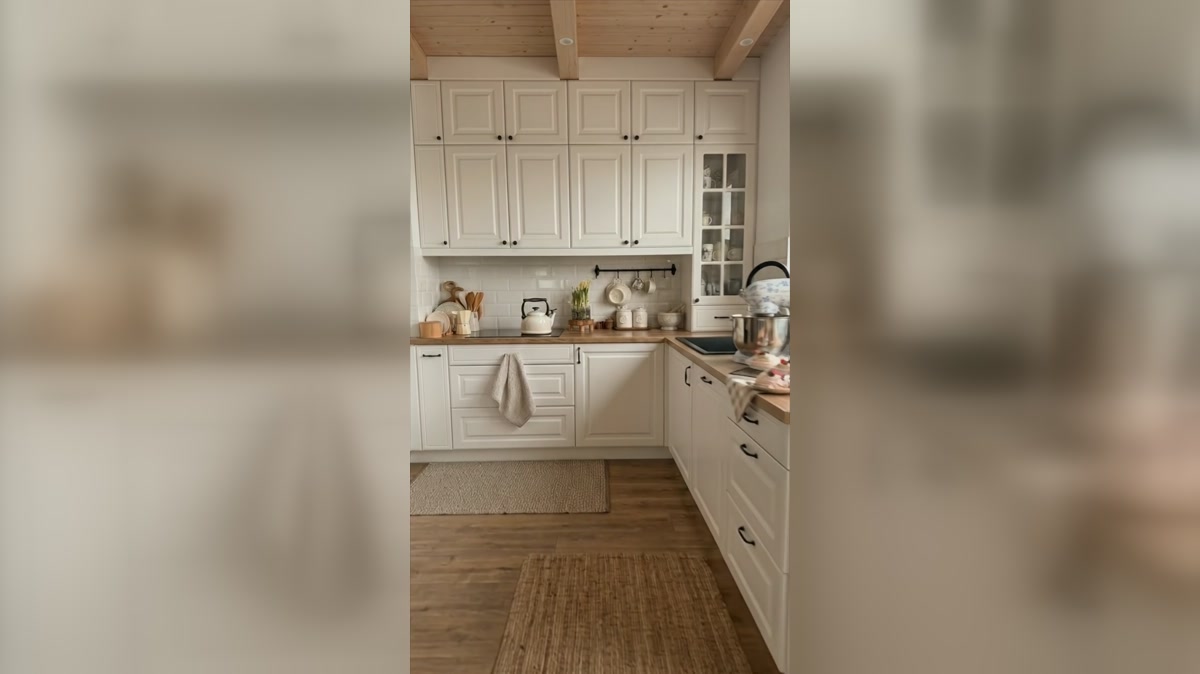
The doors have raised frames and simple proportions, giving the cabinet wall a gentle rhythm. Glass panes, small drawers, and changing door sizes prevent the run from feeling repetitive. Black handles add definition and make the joinery easier to read from across the room.
A pale backsplash continues the bright background but has enough joint lines to add texture. Because the timber counters are visually active, the wall finish wisely remains quiet.
A warm, useful color palette
The foundation is cream white and medium oak, with black as the structural accent. Soft blue, blush pink, berry red, and ceramic beige appear in movable objects. That means the mood can change seasonally without altering the expensive parts of the kitchen.
For example, the same room could feel festive with red textiles, summery with green herbs and yellow flowers, or quiet in winter with cream linen and brown pottery. The cabinet and worktop palette is flexible enough to support all of them.
How to build a kitchen around baking
- Create one uninterrupted work surface for rolling, mixing, and cooling.
- Store the mixer where it can stay plugged in or be moved with minimal lifting.
- Keep frequently used mugs, measuring tools, and bowls within arm’s reach.
- Use drawers below the main worktop for baking sheets, parchment, and small equipment.
- Choose warm, forgiving counter materials or use a dedicated timber worktable.
- Let useful textiles, ceramics, and ingredients provide the room’s changing color.
Why it feels like home
The strongest feature is not the cabinetry, sink, or mixer on its own. It is the evidence of routine. The room is arranged around making, serving, and sharing food. Its decorative details reinforce those activities rather than distract from them.
That makes the kitchen more than attractive. It feels believable. The white cabinets provide calm, the wood provides warmth, and the personal tools give the space a reason to be remembered.