Chapter 7
I do not know if Patricia and I will ever be close. I suspect we won’t. But the last time I saw her, at a school event in the spring, she approached me in the hallway, and instead of the sharp, dismissive tone she’d used in the courtroom, she said, simply, “You look well.” I told her I was. She nodded once, and that was the entire conversation, and somehow it felt like more progress than a hundred long apologies would have.
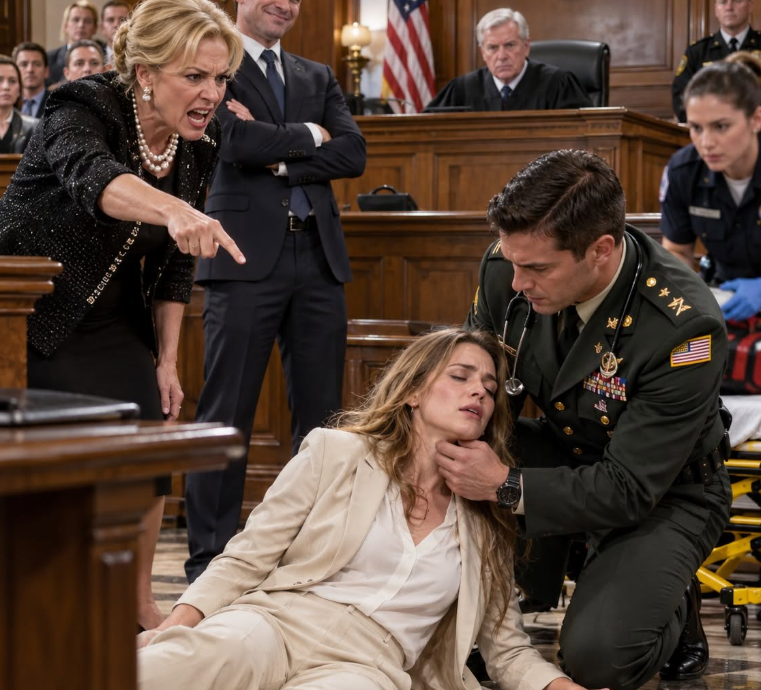
As for me — I went back to school myself that spring, finishing the certification I’d abandoned years earlier when things with Daniel started falling apart. I started dating again, slowly, months later, a man named Marcus who, on our second date, asked thoughtful questions about the small scar below my collarbone instead of treating it like an inconvenient detail. When I told him the whole story — the courtroom, the collapse, Colonel Carter, the pacemaker, the custody fight — he didn’t say any of the things I had braced myself to hear. He just said, “That’s an unbelievable amount to survive,” and let me sit with the fact that surviving it did not require anyone else’s permission to matter.
Colonel Carter and I stayed in touch, in the loose way strangers who share a life-altering moment sometimes do. He sent a card when the final custody order became permanent, just a short note: Glad the numbers on the monitor finally told the story everyone needed to hear. I keep it in the folder, along with everything else.
Lily is nine now. She still sleeps with the same stuffed rabbit, though it has been through the washing machine so many times its fur has gone soft and pale. She knows the basic shape of what happened to me — that my heart used to skip and slow in ways that scared everyone, that a doctor found it, that I have a small machine that helps it now. She does not know every detail of the courtroom, and I do not plan to tell her every detail until she is old enough to understand it without carrying it as her own burden. But she knows this much, because I have told her plainly, more than once:
“Nobody gets to decide what’s happening inside your body except you and your doctors. Not even people who love you. If you’re ever scared like I was, you don’t have to convince anyone. You just have to keep telling the truth until the right person listens.”
She asked me once, not long ago, why Colonel Carter had believed me so fast when everyone else in the courtroom hadn’t.
“Because he checked,” I told her. “He didn’t guess. He didn’t assume. He just checked.”
I think about that a lot — how the whole difference between being disbelieved and being saved came down to one stranger who chose to check instead of assume. I have tried, in the years since, to carry that lesson forward in smaller ways — with friends who mention symptoms doctors have brushed off, with a coworker who once quietly admitted she’d been told her chronic pain was “probably just stress.” I don’t diagnose anyone. I just tell them what I learned the hardest way possible: that an absent diagnosis is not the same thing as an absent illness, and that the people who love you the most can still, sometimes, be the last ones to believe you.
The pacemaker interrogation last month showed everything working exactly as it should. Dr. Shah, scrolling through months of steady, uneventful rhythm data, smiled at me the way she had the very first day she told me the truth I’d needed someone to say out loud.
“Boring readouts,” she said. “Best kind there is.”
I laughed, and I meant it, because there is a particular kind of joy in an ordinary heartbeat once you have known what it feels like to lose one. I drove home that afternoon with the windows down, picked Lily up from school, listened to her tell me, in exhaustive detail, about a science project involving baking soda and vinegar, and felt my own heart — steady, unremarkable, mine — carrying me quietly through an entirely unremarkable, entirely wonderful afternoon.
That, I have come to understand, is what winning actually looks like. Not a single dramatic verdict, not a courtroom gasp, not even the moment Judge Hanley signed the final order. It looks like Tuesdays. It looks like a child who no longer has to guess whether her mother is telling the truth. It looks like a heartbeat nobody has to argue about anymore.
And somewhere in a folder on my phone, next to the screenshots I once thought I’d need as ammunition, there is a photo Lily took of me last summer, laughing on the porch, sunlight catching the thin white line of scar just visible above my collar. I never intended to keep it. But now, whenever I need reminding of everything we survived to get here, I open it, and I remember: I was never pretending. I was only waiting for someone to check.
—END OF Chapter 7, —PRESS NEXT PART IN BOTTOM OF PAGE TO READ NEXT Chapter
At My Sister’s Wedding, Mom Handed Me an $86,000 Bill and Sneered That I Was Rich.
22/10/2026 by Jothan
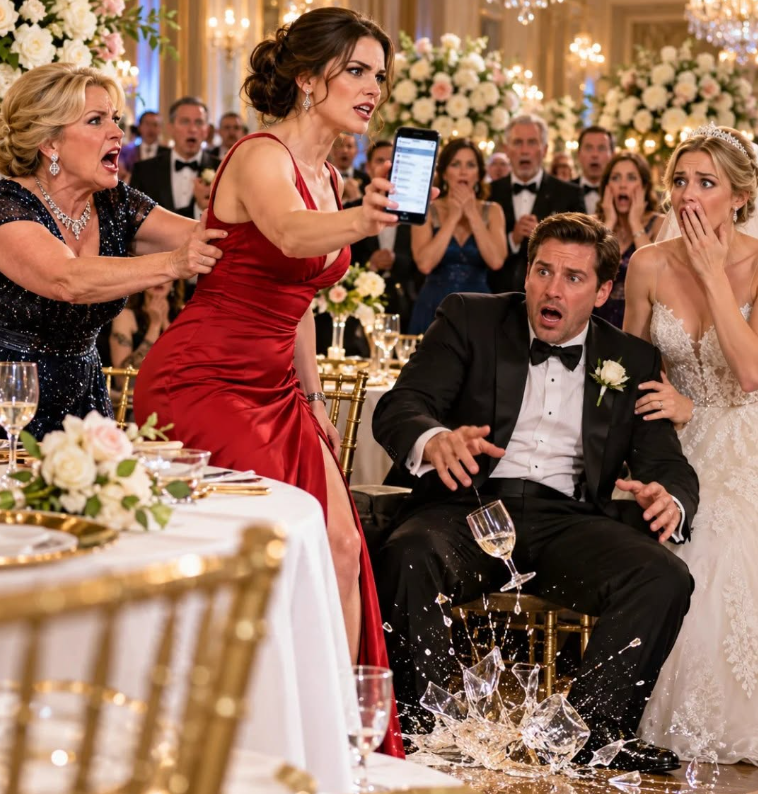
PART 1 The first thing my mother gave me at my sister’s wedding was not a hug. It was an $86,000 invoice, folded once, pressed into my palm like a punishment. “You’re rich,” Mom said, smiling for the photographer. “You can afford it.” Around us, the ballroom glittered with crystal chandeliers, white roses, and two …
Categories Stories USA
READ ENDING HERE ⤵️👇
