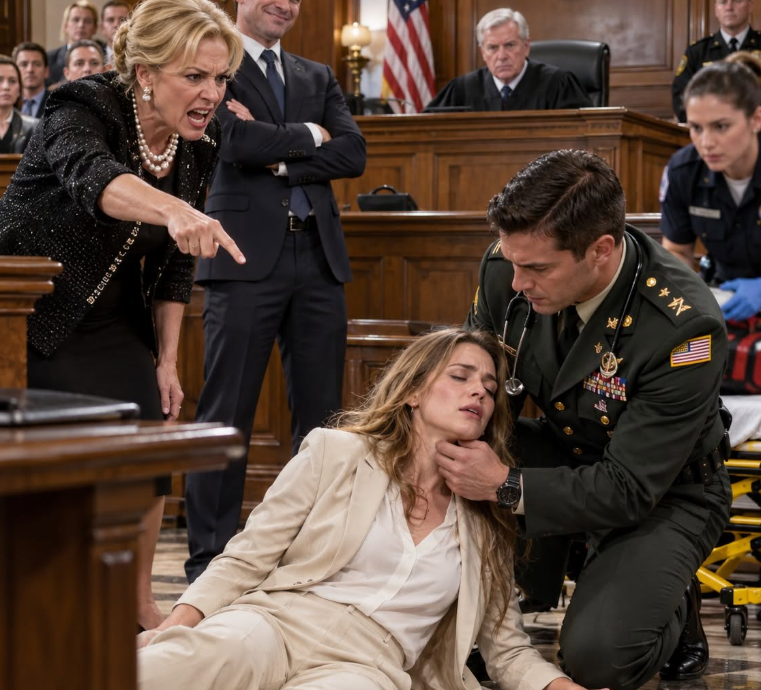
PART 2:
I stared at Dr. Shah because I had spent so long hearing that nothing was wrong that the truth felt almost impossible to accept. She explained that the electrical signal inside my heart was sometimes failing to travel the way it should, causing my pulse to drop far below a safe rate. Stress could make people feel dizzy, she said, but stress could not explain what the monitor had recorded while I was lying quietly in a hospital bed. For the first time, my symptoms were not an opinion—they were numbers on a screen.
Then she said I might need a pacemaker. I was thirty-four years old, and the word sounded like something meant for someone else’s life. I asked whether I was dying, and she told me no, but she did not soften the seriousness of what they had found. They were keeping me overnight because they needed to see whether the rhythm problem happened again.
My phone arrived a little later with missed calls from Daniel and Patricia. Daniel’s first messages asked what the doctors had found, but the last one said, “Your stunt has now delayed everything.” Patricia’s message was worse in a quieter way: “You frightened everyone today. Let us know when you are ready to behave reasonably about custody.” I took screenshots of both before I could talk myself into deleting them.
That decision mattered because deleting cruel messages had become one of my worst habits during our marriage. Daniel would say something awful, apologize later, and I would erase the proof because I wanted the kinder version of him to be the real one. Lying in that hospital bed, I realized how many times I had helped him clean up the story after he hurt me. So I created a folder on my phone and started saving everything.
Then the court clerk called. Judge Hanley had suspended the custody hearing until I was medically cleared, but he had also issued a new order requiring both sides to preserve the complete medical records used during the hearing. The word “complete” stayed in my head long after the call ended. Daniel’s attorney had shown the judge pieces of my records, but I suddenly remembered one hospital visit from months earlier that had not sounded nearly as dismissive as he claimed.
I logged into my patient portal and found the note from May. A doctor had written that my recurrent near-fainting episodes needed additional cardiac evaluation and specifically recommended an ambulatory heart monitor. The note also said an intermittent arrhythmia could not be ruled out. Daniel had been sitting in that room when the doctor told me to follow up.
In court, however, his attorney had emphasized only the line saying I had been discharged in stable condition. He had used that sentence to make it sound as though the doctors had already proved I was fine. Nobody had read the recommendation for cardiac monitoring, and nobody had mentioned that a physical cause was still being investigated. The truth had not been completely erased—it had simply been trimmed until it told the story Daniel wanted.
That night the monitor beside my hospital bed sounded an alarm while I was asleep. There was no argument, no courtroom, no audience, and nobody for me to manipulate. My heart rate had dropped into the thirties again while I was doing nothing but sleeping. By morning, Dr. Shah had stopped saying I “might” need treatment.
“You need a pacemaker,” she told me. I asked her one last time whether panic or anxiety could have caused what they recorded, because some part of me still needed permission to believe my own body. She shook her head and said, “You cannot decide to create the conduction abnormality we captured.” Then she added, “Being frightened does not mean you imagined the reason you were frightened.”
Before they took me for the procedure, I downloaded every medical record I could find. I saved the May note, the emergency room visits, the reports of blackouts, and the recommendation Daniel had heard with his own ears. For months I had thought my only problem was getting doctors to find the right diagnosis. Now I realized I had another problem waiting in court: someone had already taken an incomplete medical story and used it to decide what kind of mother I was.
READ ENDING HERE ⤵️👇
