PART 6:
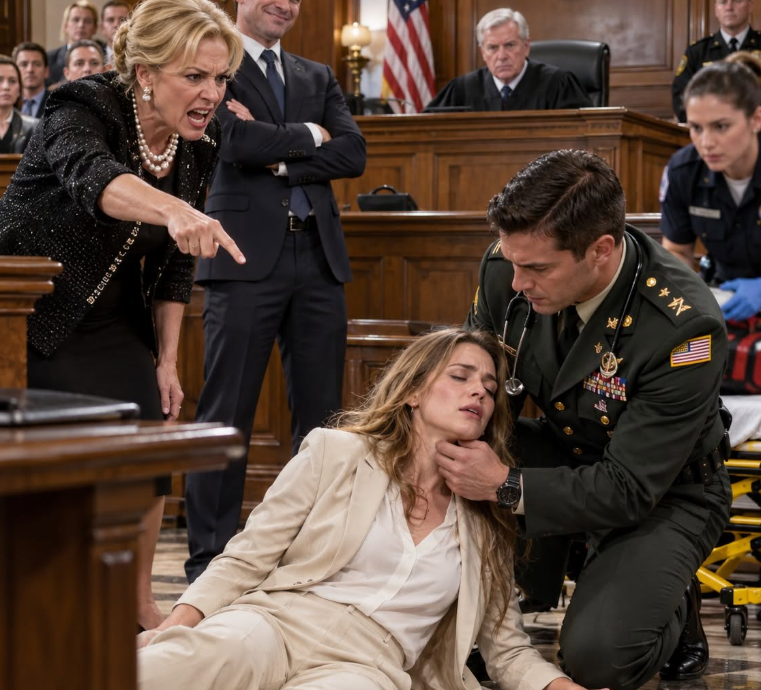
Colonel Carter found me in the hallway outside the courtroom. He was out of uniform that day, just a gray sweater and jeans, and without the insignia he looked less like the man who had shouted “CALL 911” across a stunned courtroom and more like someone’s kind neighbor.
“You did well in there,” he said.
“You did the hard part,” I told him. “You believed me before anyone else did.”
He shook his head slightly. “I didn’t believe you. I checked your pulse. Belief wasn’t required.” Then he softened. “But for what it’s worth, in twenty-two years of practicing medicine, I’ve learned that the people accused of exaggerating their symptoms are almost never the ones exaggerating. It’s usually the opposite. They’ve learned to minimize, because minimizing is safer than being disbelieved again.”
I thought about that sentence for a long time afterward. It explained so much about the year before my diagnosis — the way I had downplayed the blackouts to Daniel, softened the ER visits when I described them to friends, apologized for needing to sit down when the room tilted. I had spent a year making myself smaller so that my illness would be easier for other people to accept.
“Why did you come to the second hearing?” I asked him. “You didn’t have to.”
“Because Susan Bell asked if I’d be willing to testify, and because I kept thinking about your daughter,” he said. “I have two kids of my own. If a doctor watched something happen to their mother and then just went home and forgot about it, I don’t think I could live with that.”
Lily was waiting for me in the car with my sister, who had driven up for the hearing and taken her for ice cream during the worst of it. When I opened the door, Lily looked up at me with chocolate at the corner of her mouth and an expression that was trying very hard to be casual.
“Did the judge say I still get to see Daddy?”
“Yes,” I said, climbing in beside her. “Just — for a little while, someone else will be there too, to make sure everybody’s being kind to each other.”
She considered this with the seriousness only a seven-year-old can produce. “Like a referee?”
“Kind of like a referee.”
“Good,” she said. “Because sometimes Grandma isn’t very kind.”
I did not push her to say more. Susan Bell had warned me that pulling information out of Lily, even gently, risked teaching her that her job was still to report on the adults around her. So I only said, “You don’t have to figure any of that out anymore, baby. That’s the grown-ups’ job now.”
—END OF Chapter 4, —PRESS NEXT PART IN BOTTOM OF PAGE TO READ NEXT Chapter
READ ENDING HERE ⤵️👇
